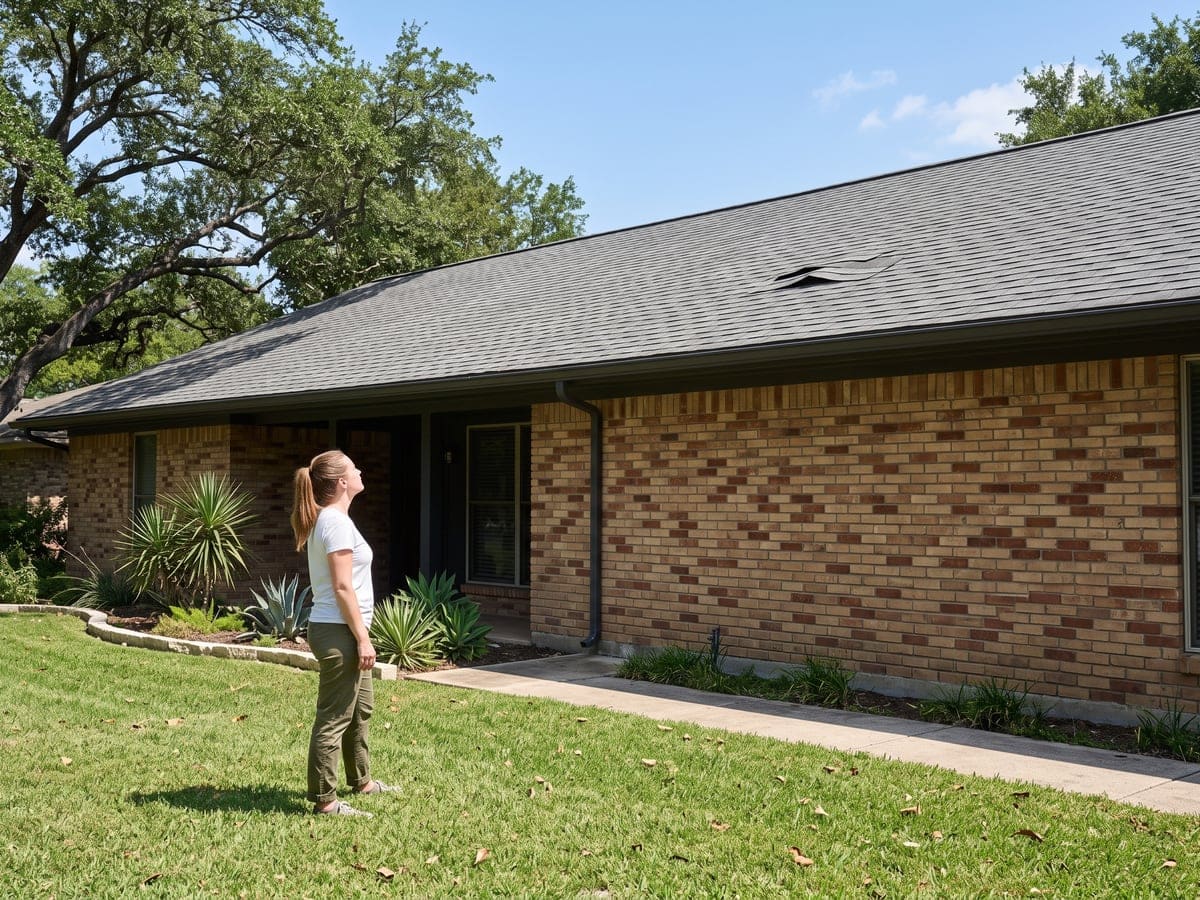
What our roofer checks on a roof that needs work
The first checks happen before anything comes off the roof. Our roofer starts with where you are seeing trouble, then the parts around it, and asks about the material and age of the covering.
1. Where the trouble is and what the roof is made of
Shingle, metal and tile repairs are different jobs, so the first question is which slope has the problem and what the covering is. Age helps too. ARMA,1 the shingle makers' trade association, says a repair should use materials that closely match the shingles in place, ideally leftover shingles saved from the original install, and knowing the color name and install year helps.
2. Shingles: cracked, bruised, curled, lifted or missing
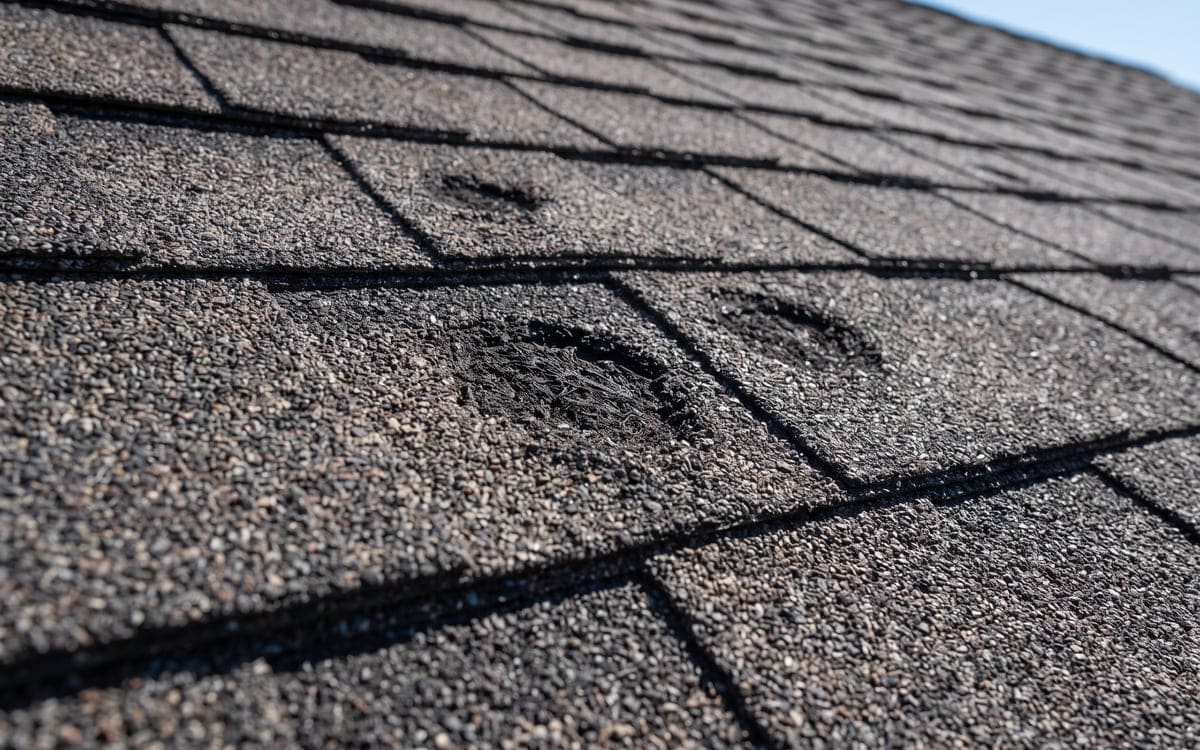
We walk the slopes and look at the shingles themselves. Buckled shingles2 can come from wrinkled underlayment, moving deck boards, nails not driven flush, or something caught under the shingles. For a nail backing out, ARMA describes1 pulling it, driving a new fastener in an adjacent spot, and hand sealing the shingle above. The wind can break the seal strip on a shingle, and resealing or replacing that shingle is on ARMA's short list of qualified-roofer repairs. Heat changes the work:3 the sealant bond on an existing roof is likely fully activated, so removing or repairing shingles in hot, sunny weather is difficult without tearing them.
3. Flashing at walls, chimneys and valleys
Flashing is thin sheet metal that directs water toward gutters and away from inside,4 set wherever a roof plane meets a wall or something pokes through. Our roofer looks at step flashing along a wall (set under the shingles course by course), the two-part chimney flashing (an apron fastened to the deck and counterflashing fastened to the masonry), and the valleys where two slopes meet. Rusted, dented or missing-fastener flashing5 is the maker's own reason to call a roofing contractor for a closer look.
4. Pipe boots, vents and the ridge
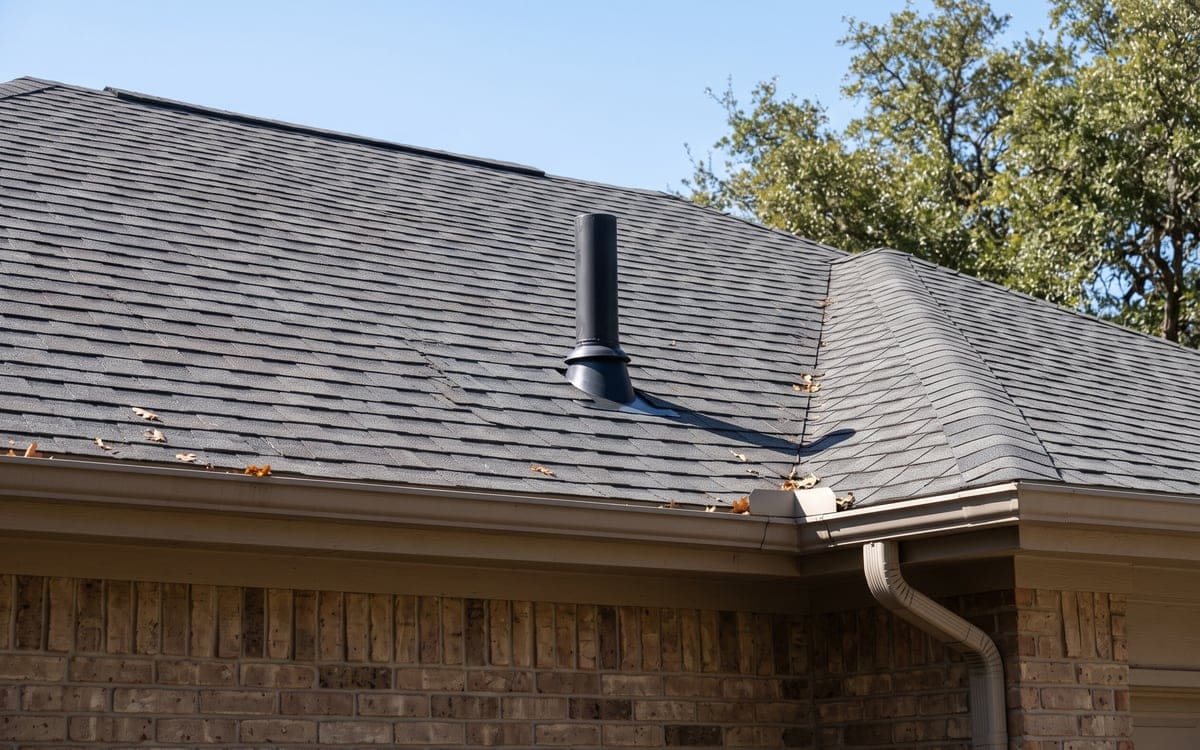
A vent pipe gets a preformed flange (a boot) that fits snugly over the pipe, sits over the lower shingle, and tucks under the shingles on the sides and above, set in asphalt roof cement; ARMA's residential manual4 names a yearly flange check for cracks. Some vent pipes are instead sealed with a rubberized gasket that can dry out and fall apart over time.5 Our roofer also checks whether the ridge and hip caps are torn, lifted or missing.
5. The deck under a soft or stained area
If a shingle shows wear and the deck below feels soft, the sheathing is looked at. Deteriorated or rotted areas4 in sheathing are replaced. The deck decides whether a shingle swap is enough or a square of sheathing comes out as part of the fix.
6. Whether the repair can match what is there
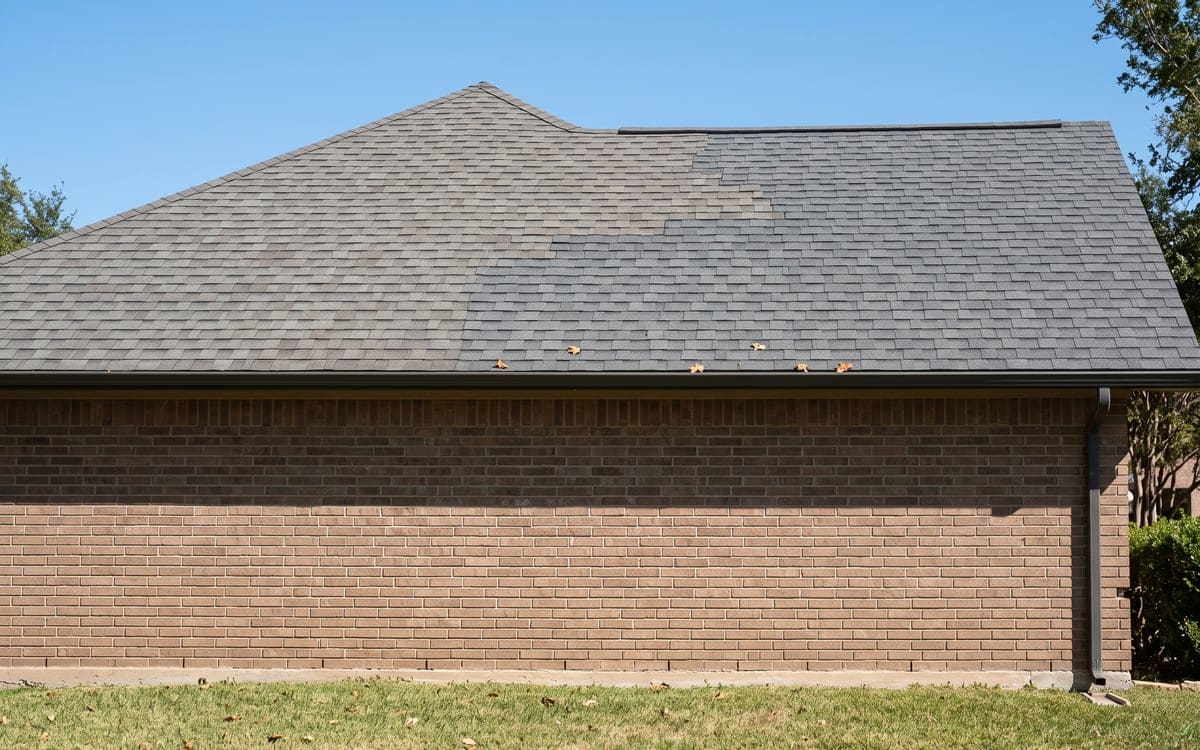
A repair should match the roof it joins. New shingles may look different at first1 because the material has not aged like the rest, and the difference generally fades. On an older roof with shingles no one makes anymore, we talk through what a close match looks like before anything is ordered.
Here is what the common calls look like. For metal roof repairs, the panel type sets the table and that lives on its page.
| Symptom | Likely cause | What it usually needs |
|---|---|---|
| Granules in the gutter | Foot traffic, water running over one section, or tree branches rubbing | A close look before anything is replaced |
| A shingle lifted or creased | Wind broke the seal strip | Resealing or replacing that shingle |
| A stain beside a chimney | A failing chimney flashing | Re-flashing the joint |
| A drip under a vent pipe | A cracked boot or a dried-out gasket | A new boot |
| Shingles curled or cracked | Heat speeds the aging of roofing materials | A repair if the area is small, a talk about a full replacement if it is not |
| A soft spot a roofer finds under a worn area | A wet or damaged deck | Replacing that piece of deck as part of the repair |
Where this page fits, and where another one does
When roof repair is the right page
The damage is in one area or a few. A pipe boot cracked, flashing pulled away at the chimney, or the wind lifted a run of shingles. Hail damaged a few shingles on one slope. The deck still feels sound, and the rest of the roof shows no wide wear.
When another page fits better
Hail that covered the whole roof is on the page for hail across the roof. Water through a ceiling now is on the page for water coming in now. A brown ring with no visible damage above is more a stain with no clear cause than a shingle swap. Worn slopes across the house, two layers already up, or several leaks point past a repair.
When a repair stops making sense
A repair stops making sense when the problem is the roof, not a spot on it. Wear across most slopes, hail damage spread out over the roof, two layers already up, soft deck in several places: those point past a repair.
Signs that point to a repair, and signs that point further
What a roofer weighs on the roof itself; the look decides, never a single number.
Often a repair
- Damage in one area or a few
- A cracked pipe boot or loose flashing
- A few lifted or missing shingles
- A sound deck under the trouble
Time to talk about more
- Wear on most slopes
- Hail damage across the roof
- Two layers already on the roof
- Soft deck in several places
The question of where repair ends is written up in that article: no Texas or Austin source states a 25 percent rule, and Austin's own line is the City's 50 percent WUI condition. A full inspection is a plain way to settle the question when a few repairs have been done and more are showing up.
What our visit covers for a roof repair
The visit covers the slope with the trouble, the parts around it, the deck from the attic hatch, and the rest of the roof enough to say whether the fix is still a repair. We go over the work and the price before anything comes off the roof. Pricing has drivers: the covering, how far the damage spreads, whether the deck is sound, how the roof is reached, and whether the shingles can be matched. What moves the price sets out the drivers for a bigger job on the same logic.
Roof repair in Austin's hail, heat and freezes
NOAA's Storm Events Database6 holds 274 hail reports of 1 inch or larger for Travis County from 1996 to mid-2026, with 216 in March, April or May. Camp Mabry's normal summer high7 is 95.9 degrees, and the station averages 28.7 days a year at or above 100. Then February 2021 brought eight days of winter weather the Weather Service calls unprecedented8 for South-Central Texas. In the 2023 ice storm,9 trees gave way under the weight of ice and fell onto cars, houses and power lines across the metro area. ARMA says10 excessive heat on a residential roof speeds the aging of roofing materials.
The City's Development Services exempts roof decking of 128 square feet or less11 from a building permit; above that line, the job goes on a Residential Express permit.12 The City adds a plain reminder: work exempt from a permit must still meet the Building Codes, City Codes and all other applicable ordinances. Whether a given roof needs a permit is a question for Development Services.