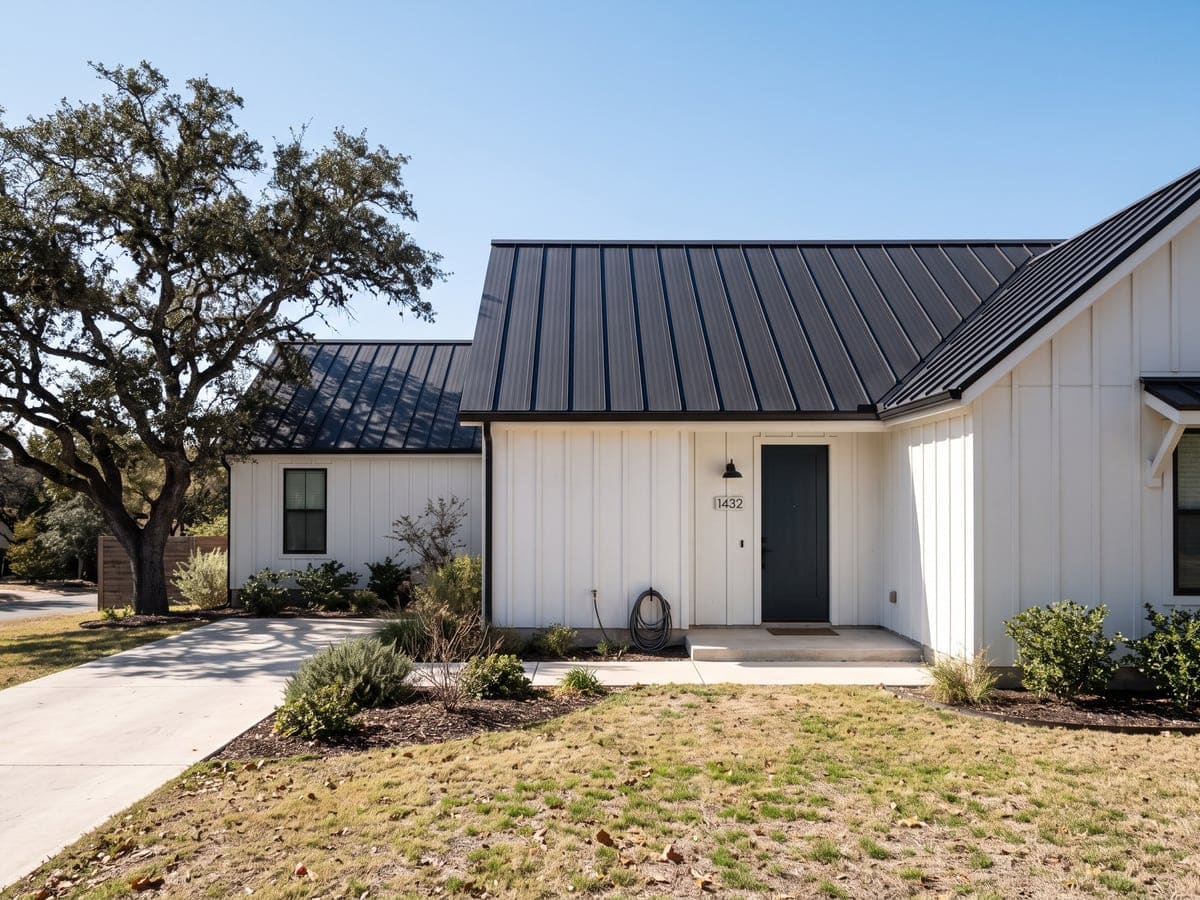
How a metal roof goes on, and what we check on one
A metal roof is a system more than a single sheet. The panel type sets the deck, the underlayment, the fasteners and the trim, so we work through the roof in that order.
1. The panel type sets everything else
The Metal Construction Association's installer manual describes standing seam panels as vertical panels with the edge bent up and folded over the neighbor1 to raise the seam above the roof surface. Through-fastened panels sit held by threaded fasteners with washers that go through the panel,1 with the fasteners visible once the roof is done. The third group, modular panels, is made to simulate asphalt, slate, wood and clay;1 stone-coated steel is one.
Three common kinds of metal roof
How the trade groups describe each one.
Standing seam
- Vertical panels
- Edges bent up and folded together
- Fasteners hidden under the seams
Exposed fastener
- Panels held by screws with washers
- Fasteners go through the panel
Shingle, tile or shake look
- Modular units laid in rows
- Made to look like asphalt, slate, wood or clay
- Stone-coated steel is one kind
2. The slope and the deck under it
An architectural standing seam panel sheds water rather than holds it, so panel makers often specify 3 inches of rise per foot or more.1 Underneath, architectural steep-slope metal roofs always need a solid substrate such as plywood or OSB.2 On an existing house we open the attic hatch and look at the deck for soft spots, loose fasteners and gaps.
3. Underlayment for a metal roof, in heat
Underlayment under metal gives temporary weather protection, a separation layer, and a secondary layer if water gets past.1 Metal panels tend to stick to softened asphalt underlayment and tear it as they expand and contract, so a slip sheet may be installed between the underlayment and the panel.1
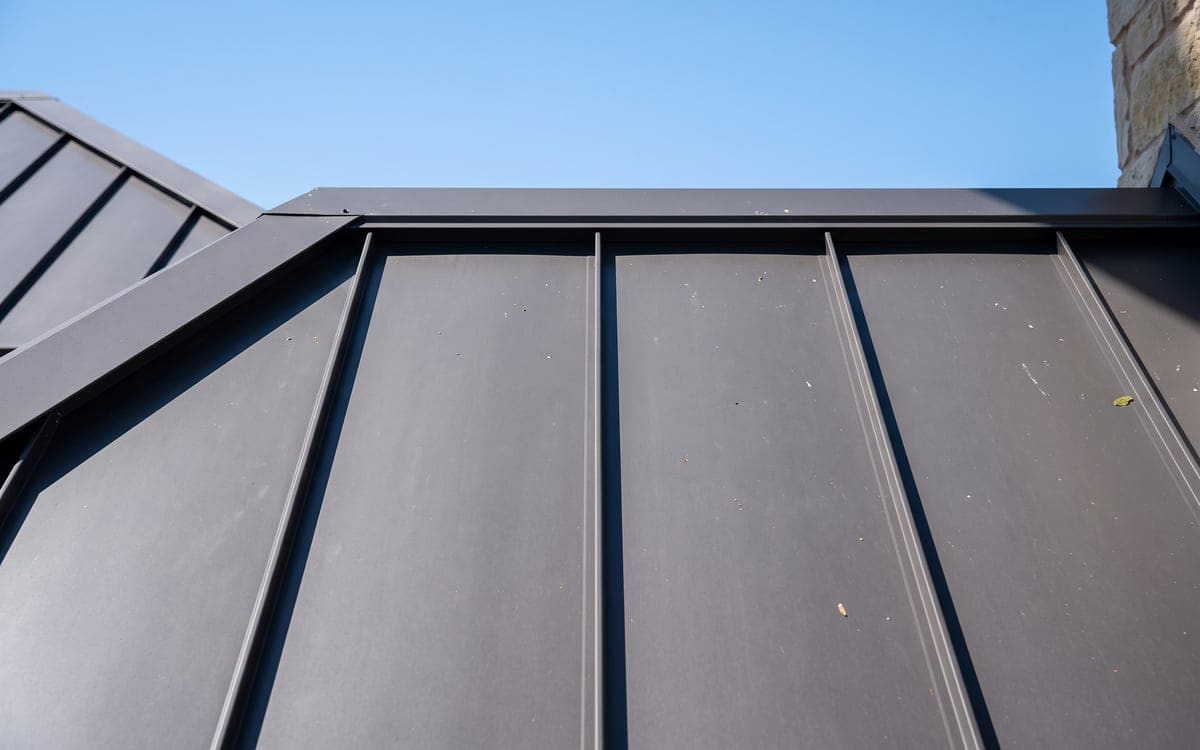
4. Panels from eave to ridge, with room to move
Panels go on from the eave up, held by clips or fasteners. Concealed clips sit along the panel edges and leave no fasteners on the main roof surface except at the eave;1 exposed-fastener panels show their screws in straight rows. The panels have to move: significant panel size change with temperature is normal, and a thing to design for.1 Each panel is pinned at one point of fixity, at the ridge, the eave or the midpoint,1 so the rest can slide.
5. Trim and flashing at every joint
The trim and flashing at the ridge, eaves, rakes, walls and every pipe decide whether a metal roof keeps the weather out. Most leaks on a metal roof happen at complicated flashing transitions, changes in slope, dead-end valleys and penetrations.1
6. Repairs on an existing metal roof
On a metal roof already on the house, we read the fasteners first. Any exposed fastener not completely secured, crooked or with a defective seal will eventually leak, and panels leak only at seams, punctures or cut openings.1 Dented panels after hail get a close look at seams, finish and fasteners around the dents. A chalky or faded surface is a different problem; chalking and fading come mostly from the sun's ultraviolet rays, and no paint avoids them entirely.1
| Symptom | Likely cause | What it usually needs |
|---|---|---|
| Screws backing out on a panel roof | Panels moving with heat | Reseating or replacing the fasteners |
| A leak at a trim line or end lap | Sealant or a closure gave out | Resealing the joint or new trim |
| Dents in panels after hail | Hailstones | A close look at seams, finish and fasteners around the dents |
| Waves in flat panel areas | Oil canning in the panel | A look at how the panel is pinned and fastened |
| Chalky or faded finish | Sun on the paint | A look before anything is applied |
| Rust at a cut edge or scratch | Bare metal exposed to weather | Treating or replacing that piece |
When this is the right page
Metal roofing fits a new metal roof on an Austin house, a switch from asphalt to metal, a repair on panels, trim or fasteners, or new trim after wind or after a limb has been cleared off. Another page fits better for a shingle repair after a hailstorm, a full shingle replacement, hail damage across a shingle roof, a new roof on an addition built in from framing, or a roof that has not had an inspection in years.
Once we look at the roof we say which page the work really belongs to. The MCA manual sets oil canning apart as an aesthetic issue, not a performance one that affects the structure or weatherproofing;1 we say so when we see it.
What a metal roof visit covers
A visit covers the whole roof. We open the attic hatch for the deck and framing, and read the seams, fasteners and trim where it is safe to be on the panels.
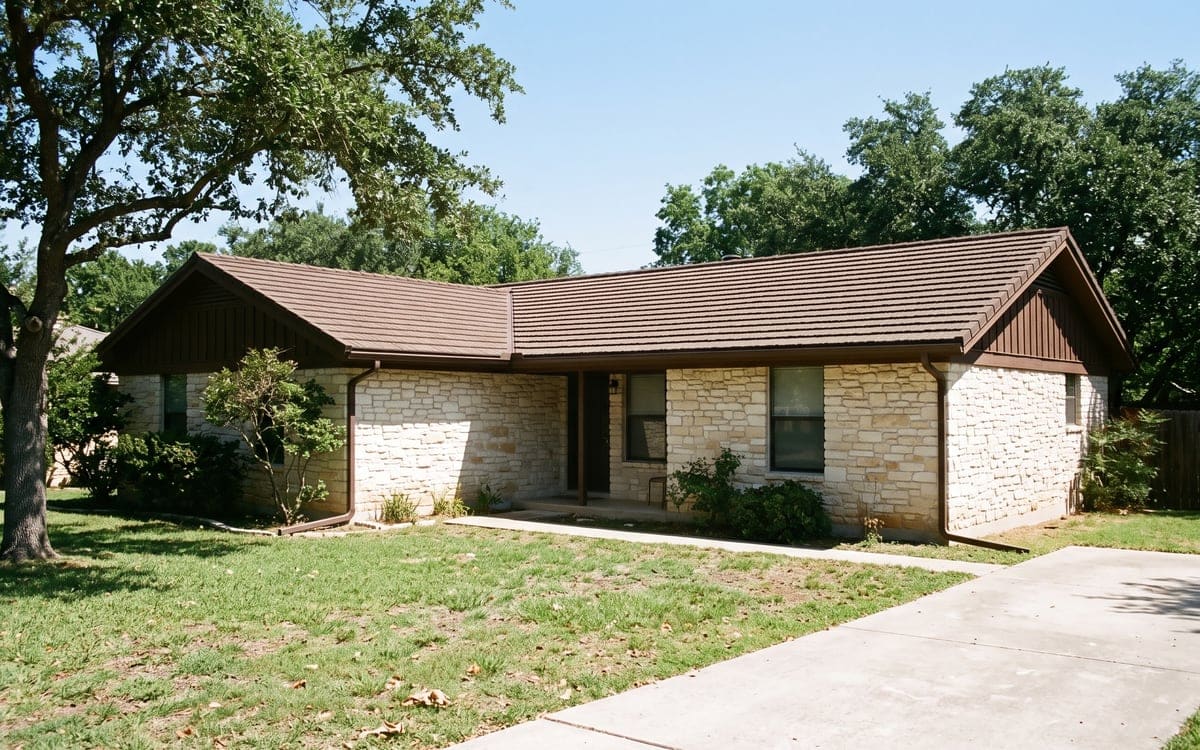
No field-applied paint or touch-up lasts as long as the original factory paint,1 the MCA manual says, so on a repair we read what is already on the house before anything new goes on.
Metal or shingles for an Austin house
The longer answer sits in metal or shingles, on fire, hail, rain noise, heat and the look. On price, the Metal Roofing Alliance says a roof's shape and pitch move the installed cost more than the style of metal chosen;3 what moves the price covers the drivers.
Before you change the roof material
An HOA and a historic designation can rule the material in or out. Texas Property Code 202.011 keeps an HOA from blocking an owner who is already permitted to install shingles from choosing wind and hail resistant, energy efficient or solar generating shingles.4 Once installed, the shingles have to resemble the subdivision's authorized ones, come in with greater durability and equal or superior quality, and fit the look of the surrounding properties.4 The law covers those shingles only; an HOA's own documents answer the metal question, and a lawyer answers the specific case.
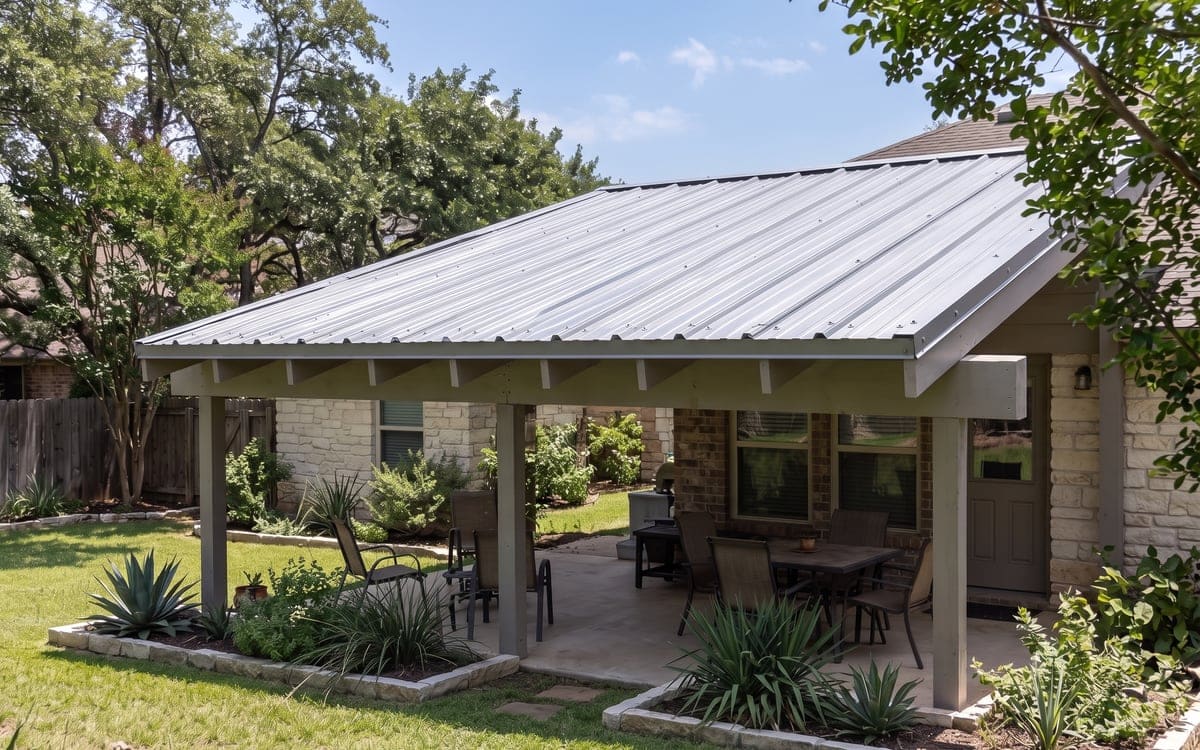
On a historic landmark or a contributing building in a local historic district, the City's Historic Design Standards require historic review to replace roof materials on a historic building, except for in-kind replacement.5 The standards say metal roofs are acceptable in historic districts unless a district supplement says otherwise.5 For historic landmarks they say standing seam metal is generally not acceptable, unless the owner can document that the building historically had one.5 The Historic Preservation Office answers for a given house.
Metal roofs in Austin's weather
Austin's heat sits behind the thermal-movement story a metal roofer plans for. Camp Mabry averages 122.8 days a year with a high of 90 degrees or more, 82 of them in June, July and August.6 Travis County carries the hail story on top: NOAA Storm Events rows hold 105 reports of 1.75 inches or larger, 54 of 2 inches or larger and 6 of 3 inches or larger from 1996 to mid-2026,7 and 216 of the 274 reports of 1 inch or larger came in March, April or May.7 Metal panels dent in hail; after a hail event we read them on their own.
Metal roofs in the wildfire area
In Austin's three WUI zones, Austin Fire says all three need a Class A rated roof covering, and that replacement of 50 percent or more requires full replacement.8 The Metal Roofing Alliance says most metal roofing carries a Class A fire-resistant rating;9 Austin Fire adds that the whole assembly is tested, and that even if a permit is not needed, the work still must follow WUI Code requirements.8