
What our roofer looks at
A shingle roof is a system of six components1 in ARMA's description: shingles, underlayment, ice and water barriers, starter strips, hip and ridge products, and balanced ventilation. An inspection is a look at those, the deck under them and the flashing wherever something pokes through the roof.
1. The roof from the ground first
The lines of the ridge and eaves get sighted from the yard first; an annual look from the ground or through upstairs windows, binoculars included,2 is what ARMA recommends. Sag between rafters, missing pieces, dents on vent caps or gutter runs and moss on a shaded slope all show from the ground.
2. Shingles or panels up close
Then the look gets closer. The hail damage modes on a shingle are dents, tears and granule loss3 in IBHS's grouping, and our roofer looks for those alongside cracks, curling, lifted tabs and broken seal strips. Damaged shingles cause leaks,2 and ARMA says fasteners should not be exposed2 unless the installation procedure calls for it.
3. Flashing, valleys and pipe boots
Penetrations and intersections are typically the most vulnerable to water infiltration,2 ARMA says. A valley is a critical part of the roof,4 because a valley not properly flashed lets water creep under the shingles. The vent pipe flashing is a preformed flange, or boot,2 to be checked once a year for cracks. For a known drip after a storm, our page on tracing a leak is the next step.
4. Vents and the ridge
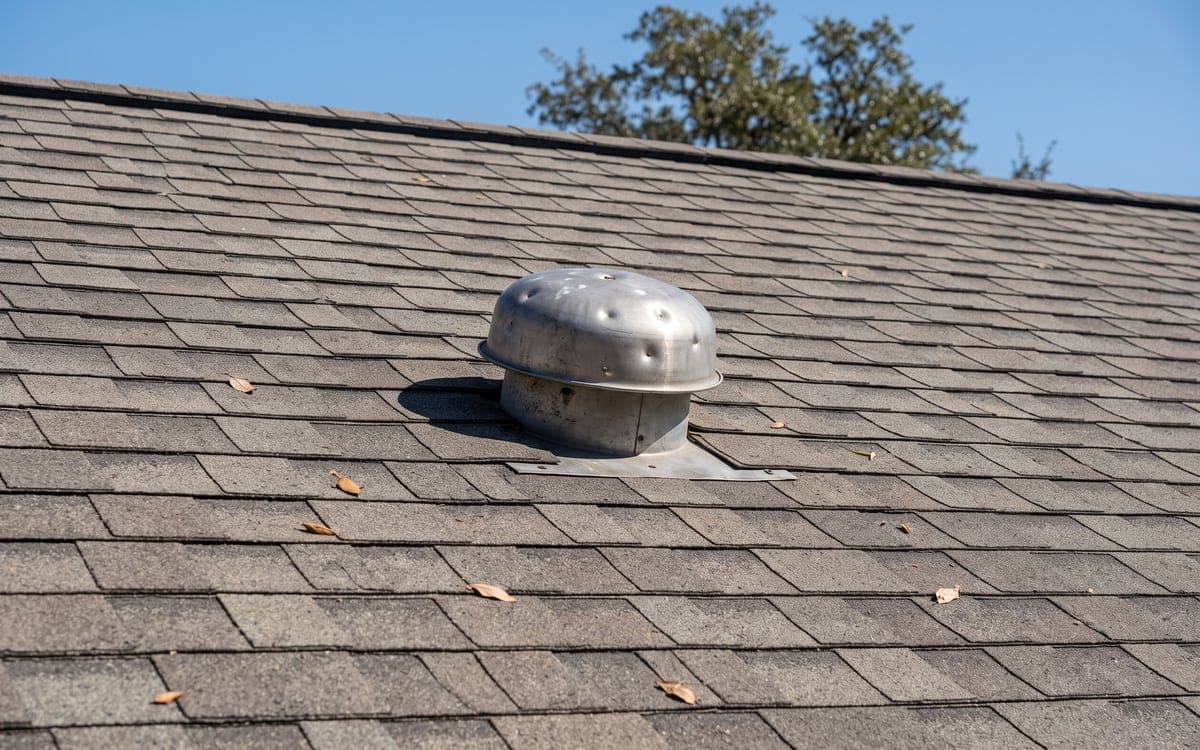
The ridge cap, the vent under it, the hip caps and the exhaust vents up top each get a look for cracks, bent housings or missing screws. On a reroof, ridge vents and other field vents get replaced5 while soffit or gable vents outside the field can stay. A dryer vent or bath fan dumping moist air into the attic is a problem on its own.
5. Gutters and downspouts as a sign of granule loss
Gutter work is not our trade, but the gutter line is worth a look. Granules collecting in a downspout splash block tell us the shingles are losing their coating. A downspout that empties onto a lower roof6 sends runoff over the same section every rain. Dented gutters after a storm are a reason for a close look at the shingles above them.
6. The attic from the hatch and inside
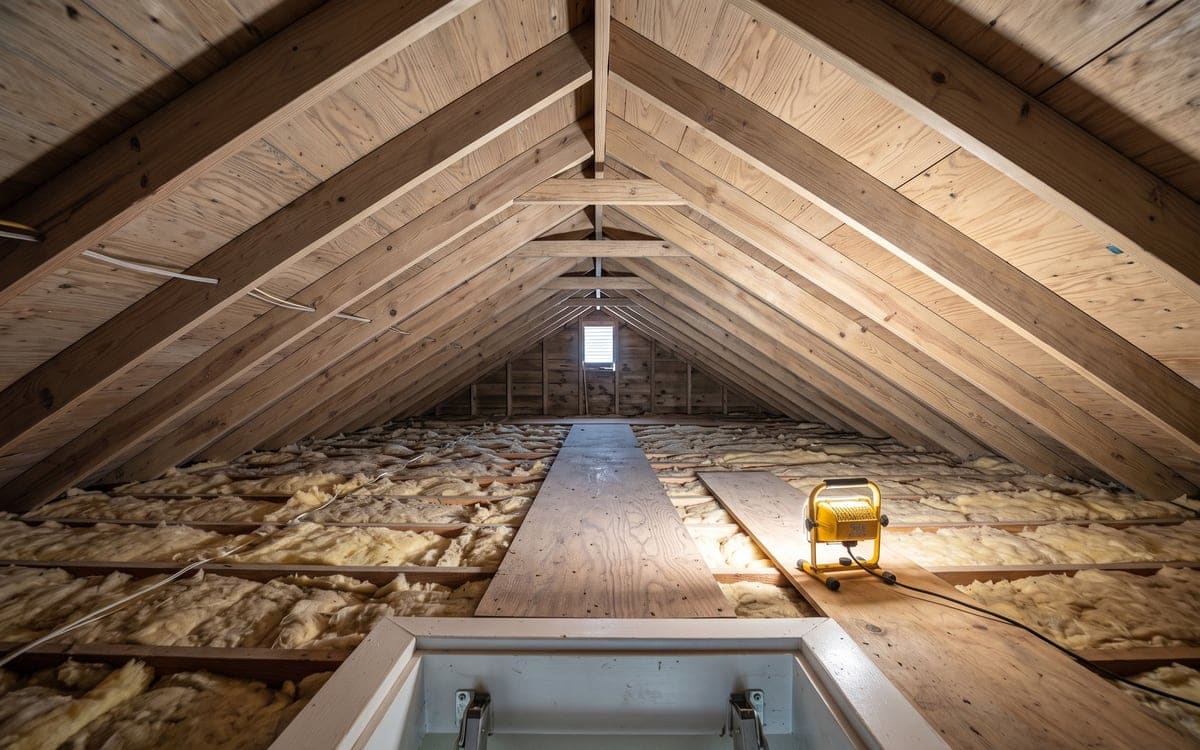
At the hatch, the look is for daylight through the deck, damp wood, rusted nail shanks, stained insulation and water running along a rafter. The underside of the deck can be inspected from the attic.2 After a major rain,6 check exterior walls for areas that stay moist.
| Symptom | Likely cause | What it usually needs |
|---|---|---|
| Granules piling in the downspout splash block | Shingle wear or hail | A close look at the shingles |
| Dents on vent caps or gutters | Hail | A look at the shingles around them |
| A ring on the ceiling under a slope | A leak above | Leak tracing and a repair |
| A hot, stuffy attic | Too little ventilation | A look at intake and exhaust vents |
| Shingles lifting at the edges | Wind, broken seal strips | Resealing or replacing those shingles |
| A roof nobody has looked at in years | Age and weather | A full inspection, then a plan |
When an inspection fits, and when another visit fits better
Signs an inspection fits
- You bought the house a while back and have never had the roof looked at
- You are selling or buying and want to know what the roof is doing
- A hailstorm came through and you can see dents on the gutters
- You want a baseline for a roof that is getting older
When another visit fits better
If the roof is leaking into the house, water coming in is the first visit. If one spot has been dripping, tracing a leak is more direct. For hail across the whole roof, the look blends into a repair after a storm. The question of repair or replace comes up after a close look, not before, and when wear covers most slopes, the conversation is about a replacement.
An inspection after a hailstorm in Austin
Hail changes what an inspection looks at. The soft metal gets checked first: gutters, downspouts and vent caps. Then the shingles get a close look. IBHS judges impact-resistant shingles on dents, tears and granule loss,3 the damage seen in real hailstorms, and that is what our roofer looks for on the shingles.
NOAA's Storm Events Database holds 274 Travis County hail reports of 1 inch or larger from 1996 to mid-2026,7 and the busiest years were 2023, 2008, 2024 and 2014.7
Checking storm damage up on the roof means climbing a ladder onto a potentially unsound structure8 and should not be attempted alone, NRCA says, so our roofer does the close look.
What you can check without a ladder
Plenty of what matters shows from a safe spot: eyes, binoculars, a phone with a zoom, maybe an attic hatch and a flashlight.
What you can look at without going up
Checks from the yard and from inside the house. Anything on the roof itself is a roofer's job.
From the yard
Missing or lifted shingles, a sagging ridge, dents on vents and gutters.
At the downspout
Shingle granules collected in the splash block.
On the ceilings
Brown rings or damp spots on a ceiling.
From the attic hatch
Daylight or damp wood, seen from the opening without stepping in.
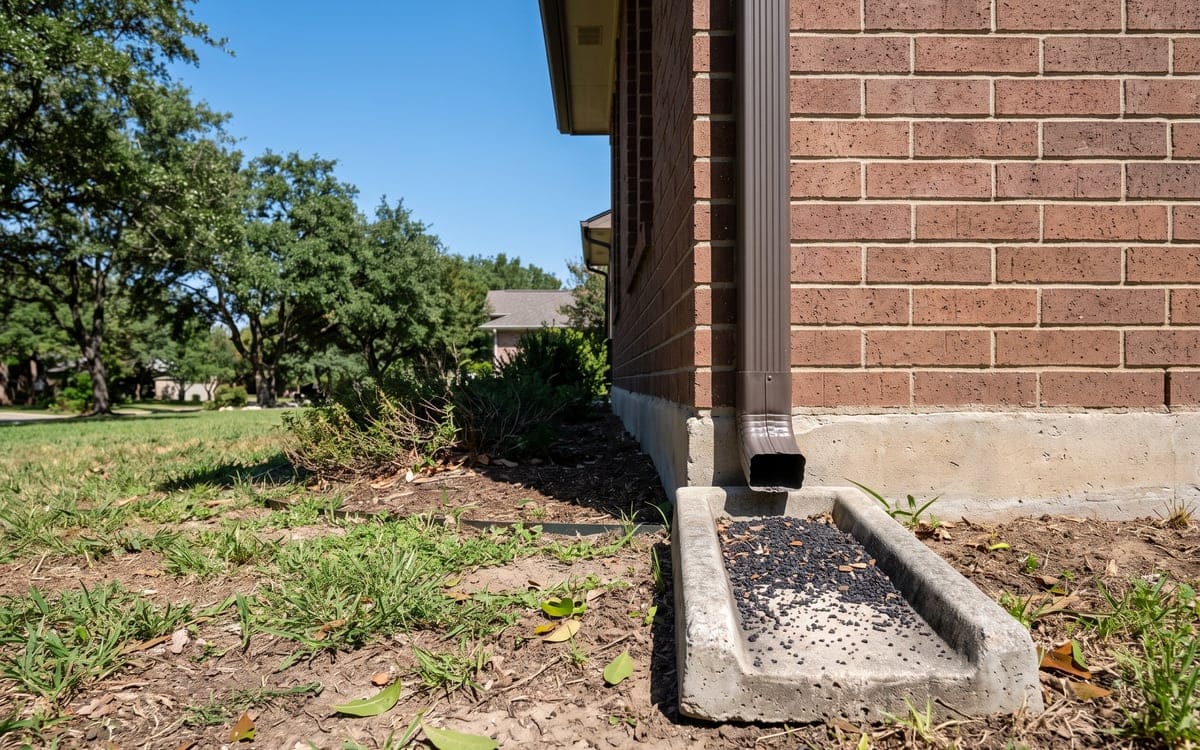
Sight along the ridge from across the street. At each downspout, look for granules in the splash block. Nobody goes out during or right after a storm; once it is safe and well clear of any downed or hanging line, check gutter runs and vent caps for dents from the yard. Inside, look at ceilings and the tops of walls under the slopes, near chimneys and bath vents. From the attic hatch with a flashlight, you can see daylight through a gap, damp wood, rusted nails or stained insulation without stepping onto the joists. Anything close up or near the roof edge belongs to a roofer.
On a visit for an inspection, our roofer looks at the whole roof, from the ground, from the eaves and through the attic hatch inside.
Roof inspections in Austin's storm months
Hail is the Austin roof story. The Weather Service says Austin's severe weather season runs mainly from March through May,9 with most of it as large hail and strong winds. Of the 274 Travis County hail reports of 1 inch or larger, 216 came in March, April or May, May the busiest month at 86.7
Winter has its own trouble. In the 2023 ice storm, trees gave way under the weight of ice and fell onto cars, houses and power lines10 across the Austin metro area.
Age matters too. The median Austin home was built in 1994,11 and the city has about 144,000 homes built in the 1970s and 1980s.12 The house's year is not the roof's year, and a house with no record of a recent reroof is a good one to put eyes on.