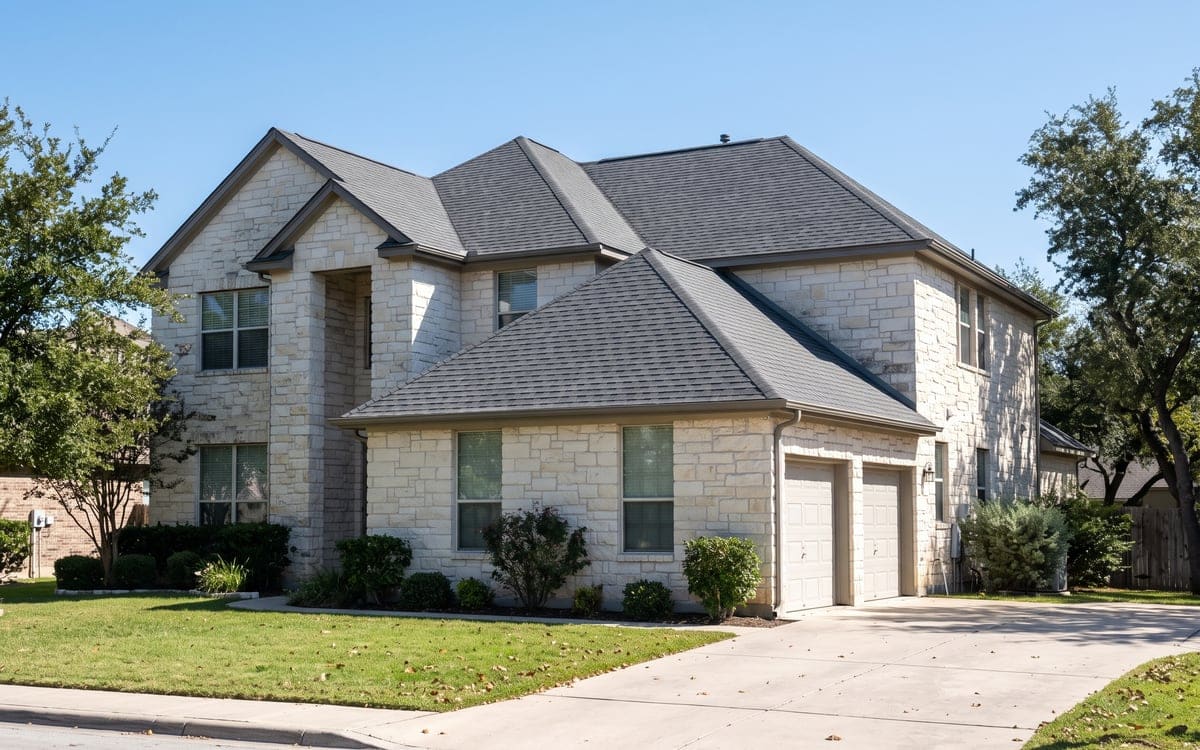
Austin roofing
Austin roofing for hail damage, worn shingles, leaks and new roofs
An Austin roof takes a long summer sun, catches the spring hail and now and then wears a glaze of ice. When a shingle lifts, a pipe boot weeps or a brown ring spreads on a ceiling, roofing work is what the house needs. "Roofers", "roofing company" and "roofing contractor" are three names for the same residential trade; this site uses all three.
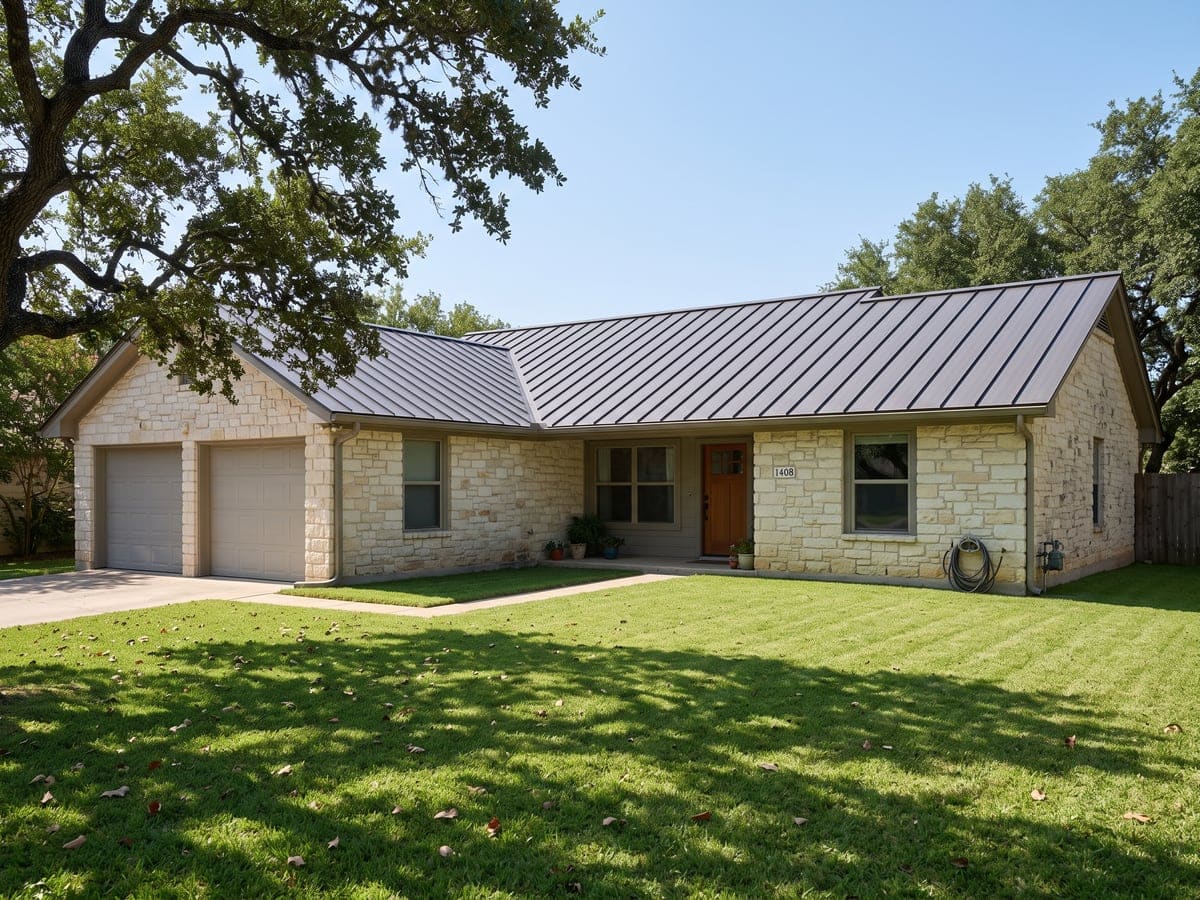
What brings people to a roofer here
Dents, tears and lost granules after a hailstorm
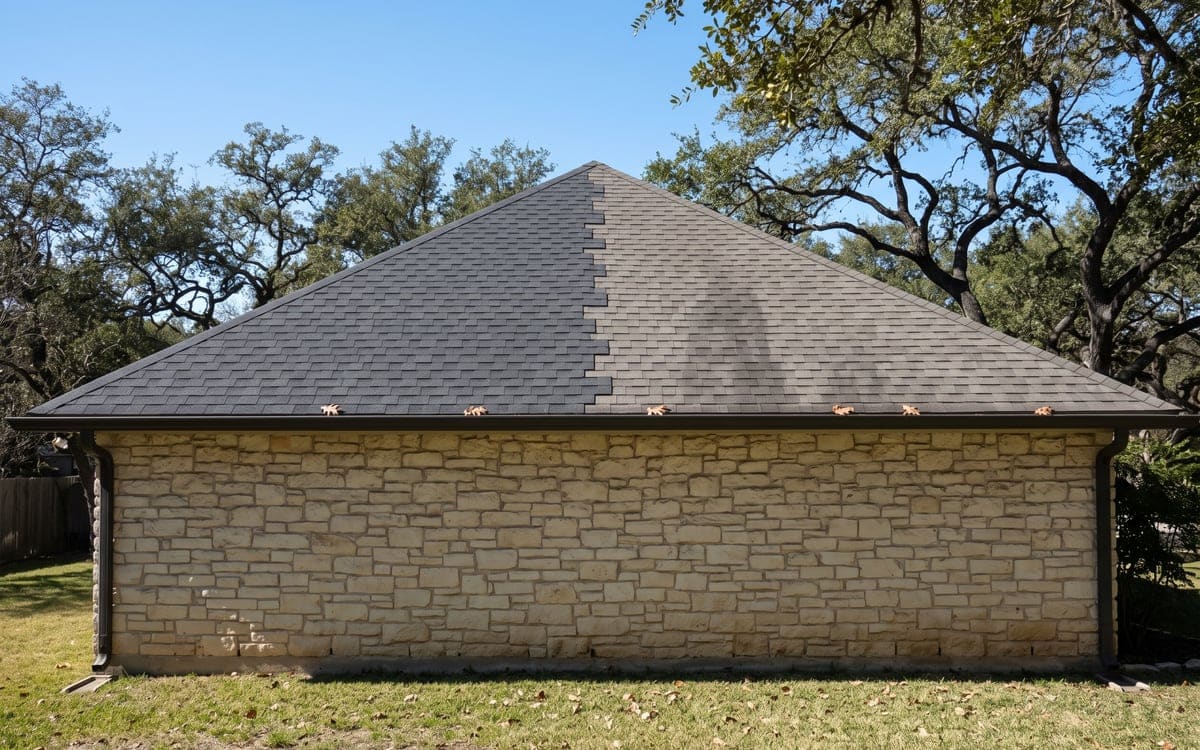
Hail knocks granules off a shingle, which leaves the asphalt exposed to ultraviolet light and makes the shingle more brittle over time;1 dents and tears can let water through. A March 25, 2009 storm report in Austin2 notes dented cars and gutters. If the yard was pelted, start with after a hailstorm.
A brown ring on a ceiling
A ceiling stain can trace back to flashing at a wall or chimney, a split pipe boot, a valley seam or a nail that worked loose. A ring on the ceiling is where to begin.
Water coming in now
Move belongings and rugs out from under the drip, catch what you can in a bucket on a towel, and keep clear of a ceiling that sags or holds water. Water coming in is the page for the roof itself.
Shingles cracked, curled or lifted
Most wind damage begins at the edges of roof systems,3 the roofing contractors' association says, and shingles that have lost granules get more prone to warping and cracking.4 One shingle or a corner of them is a repair; a whole slope going that way is a different conversation. See cracked or lifted shingles.
Thinking about a metal roof
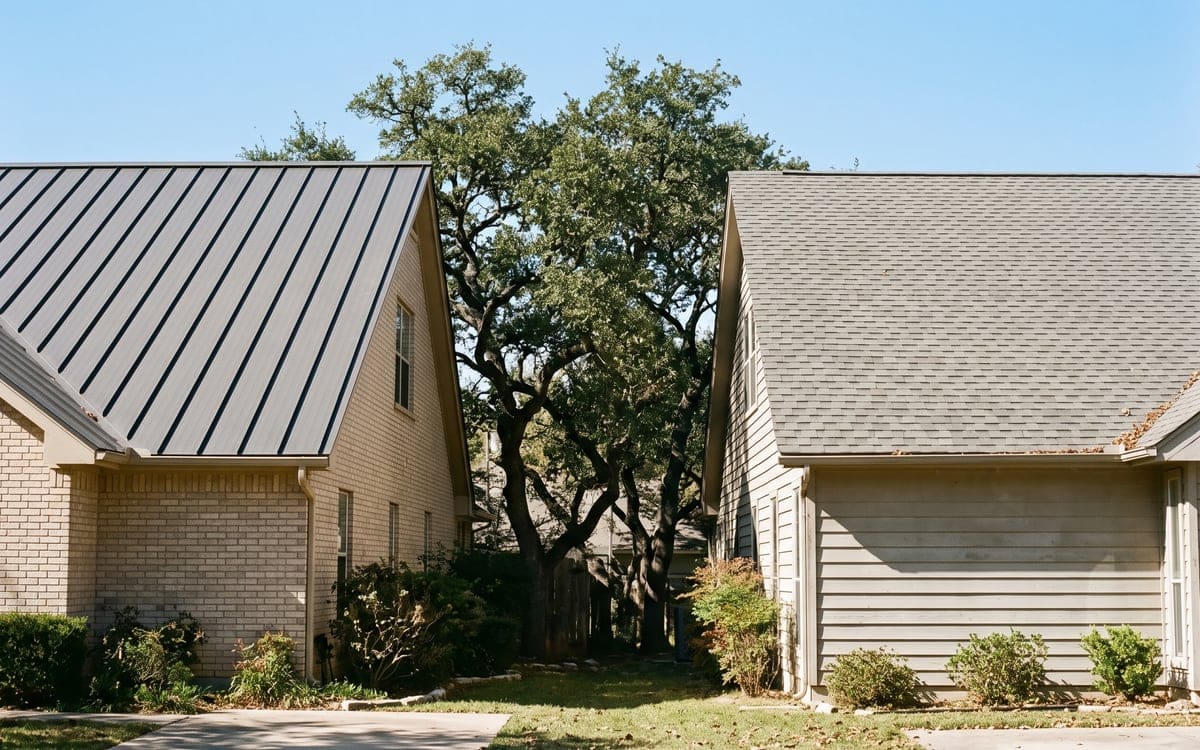
A metal roof is a different installation from a shingle one, with its own panel lengths, hidden fasteners and trim at the eave and ridge. The article on metal or shingles sets the two next to each other.
A roof near the end of its wear
When a deck already carries two or more layers of covering, the 2021 International Residential Code bars a roof recover and the existing roof has to come off before new shingles go on.5 A new roof on the house walks through what that includes.
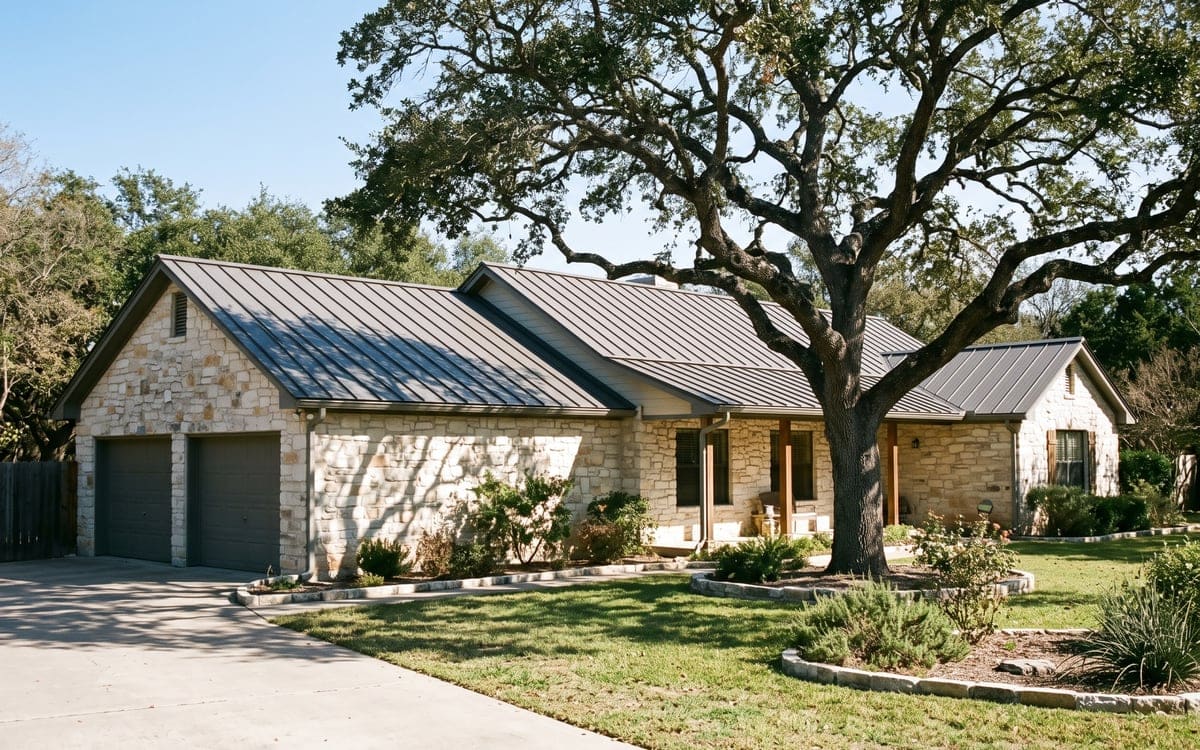
Hail, heat and the odd hard freeze
Camp Mabry's normal summer high is 95.9 degrees,6 and the same site averages 28.7 days a year at 100 or above on the 1991 to 2020 normals. Excessive heat on a residential roof speeds the aging of roofing materials, raises the attic temperature and may drive heat into the living space,7 the shingle makers' trade group says.
Travis County carries 274 hail reports of 1 inch or larger from 1996 to mid-2026,2 216 of them in March, April or May. March through May is Austin's severe weather season.8 One inch is quarter size. After a hailstorm a roofer looks at the shingle surfaces and at the gutters below them; storm damage work covers the full look.
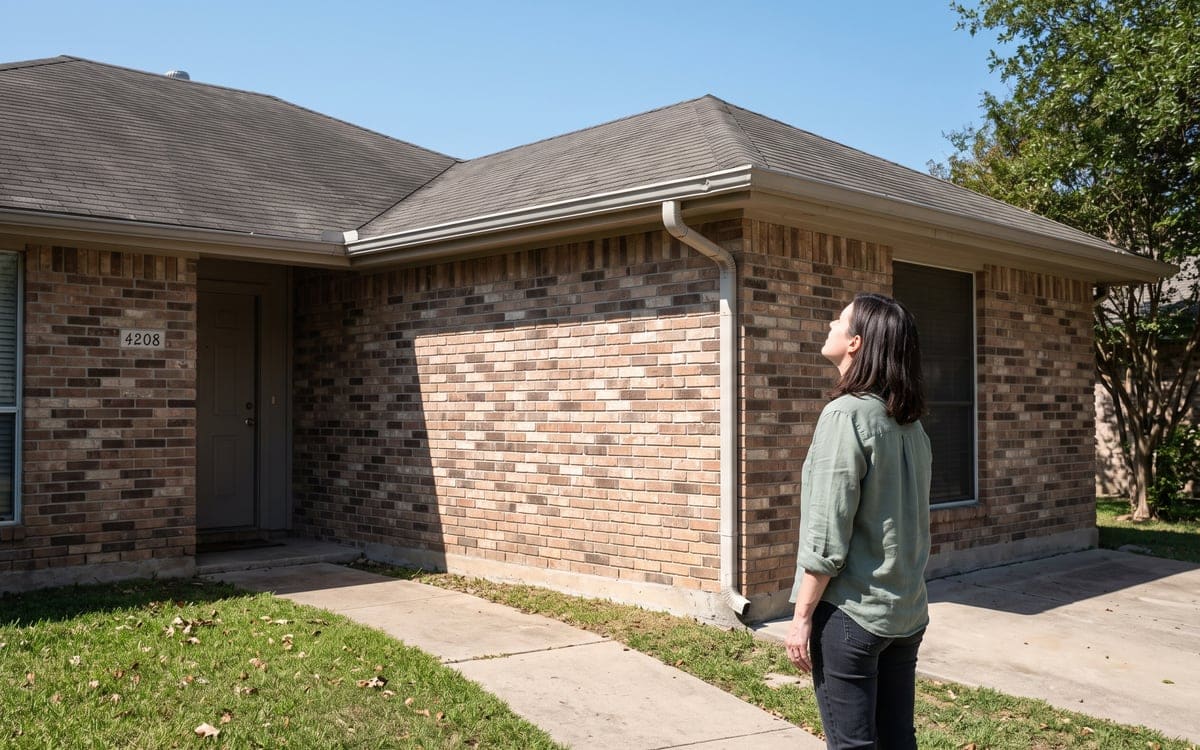
Winter is less common but real. February 10 to 18, 2021 was an unprecedented eight-day stretch of winter weather9 across South-Central Texas, with failed power grids and burst water pipes. In the 2023 ice storm trees fell onto cars, houses and power lines10 and metro outages passed 200,000. A limb on a roof is a tree trade's work first and a roofer's after.
Roofing services, by the job
The jobs sort into three groups by what the roof actually needs: repair and leak work, replacement and new roofs, and storm damage work with inspections.
Repairs and leaks
Replacement and new roofs
Hail, storms and inspections
Four things that happen when you call
- You tell us what the roof is doing: where the trouble is, the material and age of the roof if you know them, what the weather did, and whether the building is a house, a rental or a small multifamily. Access notes help too, like a locked gate or a dog in the back yard.
- We look at the roof: slopes, flashings, vents and valleys, and the attic from the hatch when it is reachable.
- You get a price and decide. Nothing starts until you agree.
- The agreed work gets done.
Austin's permit line for a roof
Austin Development Services' work-exempt list says replacing asphalt shingles with asphalt shingles on a house does not need a building permit,11 unless the property is in the Wildland-Urban Interface area and 50 percent or more of the roofing is being replaced. The same list exempts roof decking of 128 square feet or less. Austin Fire says more than half of Austin falls into one of three WUI zones,12 and the City's interactive WUI map is the starting point for whether a house is in one. Whether this roof needs a permit is a question for Development Services for that address; the piece on the 25 percent rule walks through where the common rule-of-thumb percentage people quote actually comes from.
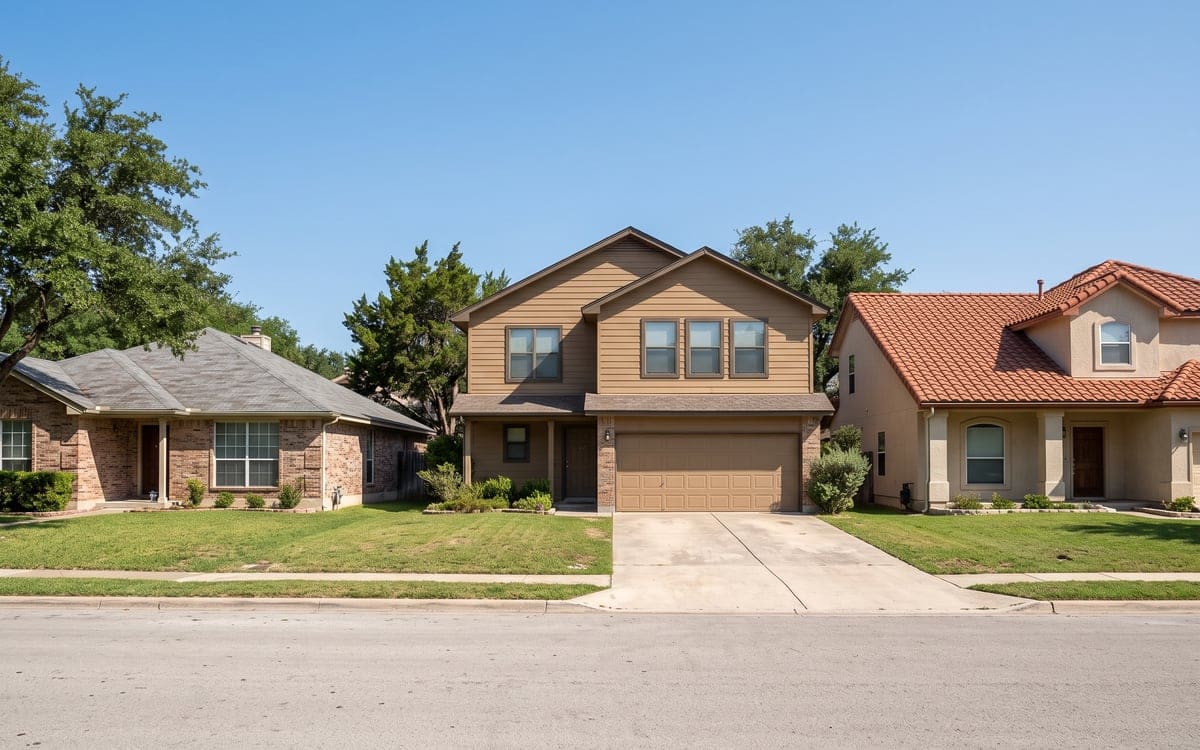
Austin houses and the roofs on them
The median Austin home was built in 1994,13 and the Census counts homes from every decade:14 about 72,000 built before 1970, about 144,000 in the 1970s and 1980s, about 140,000 in the 1990s and 2000s, and about 127,000 built since 2010. ARMA, the shingle makers' trade group, says valleys, dormers, hips, chimneys and other penetrations change the shingle quantity and trim waste that go into a roof job,15 so two houses of the same footprint can be very different roofs.
Of the city's 198,180 owner-occupied homes and 257,933 renter-occupied homes,16 the detached-house breakdown is 166,174 owner-occupied and 36,377 renter-occupied.17 Landlords and property managers call about rented houses; tenants call when they see a stain or hear water running. The service pages describe what the roof needs.
What a roof costs on a given house follows the drivers: the size, the pitch, the hips and valleys, the condition of the deck under the covering, and the covering chosen. The article on what moves the price covers them in full.
Roofing in Austin: your questions
What roofing jobs do you take on?
Residential roofing on houses and small buildings: repairs, leaks, hail and storm damage, replacement, new roofs on additions and new builds, metal roofs and inspections. Not commercial roofs, gutters, solar panels or any wiring, chimney masonry, siding or remodeling. Everything we take on is listed on one page.
What moves the price of a roof in Austin?
Size, pitch and the shape of the roof set the base. On top of that come the number of layers to tear off, the condition of the deck under the covering, the flashings and vents that need replacing, and the covering itself (shingle, metal or tile). Austin's wildfire-area rules can change what has to be used. The piece on what each driver adds sorts them in full.
Should I repair the roof or replace it?
A few lifted shingles, a bad pipe boot or loose flashing are repairs. Wear across most slopes, two existing layers on the deck, soft deck in several places, or hail damage across the whole roof points past a repair. Repair or replace walks through where the common rules of thumb come from and what Austin's own line actually is.
What does hail do to a roof?
IBHS authors say that lost granules expose the asphalt to ultraviolet light, which breaks it down and makes it more brittle over time,1 and that dents and tears can let water through a shingle. A March 25, 2009 Austin report in NOAA's database notes dented gutters among the damage from a large-hail storm. One inch is quarter size.
Do I need a City permit to replace my roof?
Austin Development Services' work-exempt list says like-for-like asphalt shingle replacement on a house does not need a building permit, unless the property is in the Wildland-Urban Interface area and 50 percent or more of the roofing is being replaced. The City also exempts roof decking of 128 square feet or less. Development Services decides a specific case, not this page.
What should I have ready when I call?
What the roof is doing, where you see the trouble, the material and the roof's age if you know them, what the weather did, and whether the house is owner-occupied, a rental or a small building. Access notes help too, like a locked gate or a dog in the back yard.
Where do you work?
Austin houses and small residential buildings. The pages describe what we take on and the work we do on a roof; the question of where you sit on a map is one to raise on the call so we can speak to it then.
Call (512) 515-9559 and tell us what the roof is doing. Or go to get in touch when you're ready.
Sources
- Insurance Institute for Business & Home Safety (IBHS) authors in NRCA's Professional Roofing magazine, 'Hail no!' by Ian Giammanco and Anne Cope, P.E., March 2022
- NOAA NCEI Storm Events Database, bulk details files, Travis County, Texas (counts made by summarize-stormevents.mjs from the saved NOAA rows)
- National Roofing Contractors Association (NRCA), Roof Repair After Strong Winds (consumer bulletin)
- Owens Corning Roofing (shingle manufacturer), Roof Maintenance Checklist: 11 Chores to Help Maintain Your Roof (April 21, 2025)
- International Code Council (ICC), 2021 International Residential Code, R908.3.1.1 Roof recover not allowed (ICC Digital Codes)
- NOAA NCEI U.S. Climate Normals 1991-2020, Austin Camp Mabry, station USW00013958
- ARMA, Attic Space Ventilation is Key to Cooling a Roof (November 13, 2023)
- NWS Austin/San Antonio, Austin Climate Summary
- NWS Austin/San Antonio, Weather Event Summary: February 2021 Historical Winter Storm Event, South-Central Texas (February 10-18, 2021)
- NWS Austin/San Antonio story map, 2023 South Central Texas Ice Storm (February 19, 2023)
- Austin Development Services, Work Exempt from Building Permits
- Austin Fire Department, Wildland-Urban Interface Code
- U.S. Census Bureau, ACS 2020-2024 5-year, table B25035, Austin city (via Census API)
- U.S. Census Bureau, ACS 2020-2024 5-year, table B25034, Austin city (via Census API)
- Asphalt Roofing Manufacturers Association (ARMA), Residential Asphalt Roofing Manual: Design and Application Methods (2014 edition)
- U.S. Census Bureau, ACS 2020-2024 5-year, table B25003, Austin city (via Census API)
- U.S. Census Bureau, ACS 2020-2024 5-year, table B25032, Austin city (via Census API)
After hail, after a leak, or ready for a new roof?
Tell a roofer what the weather did and what the roof looks like now.