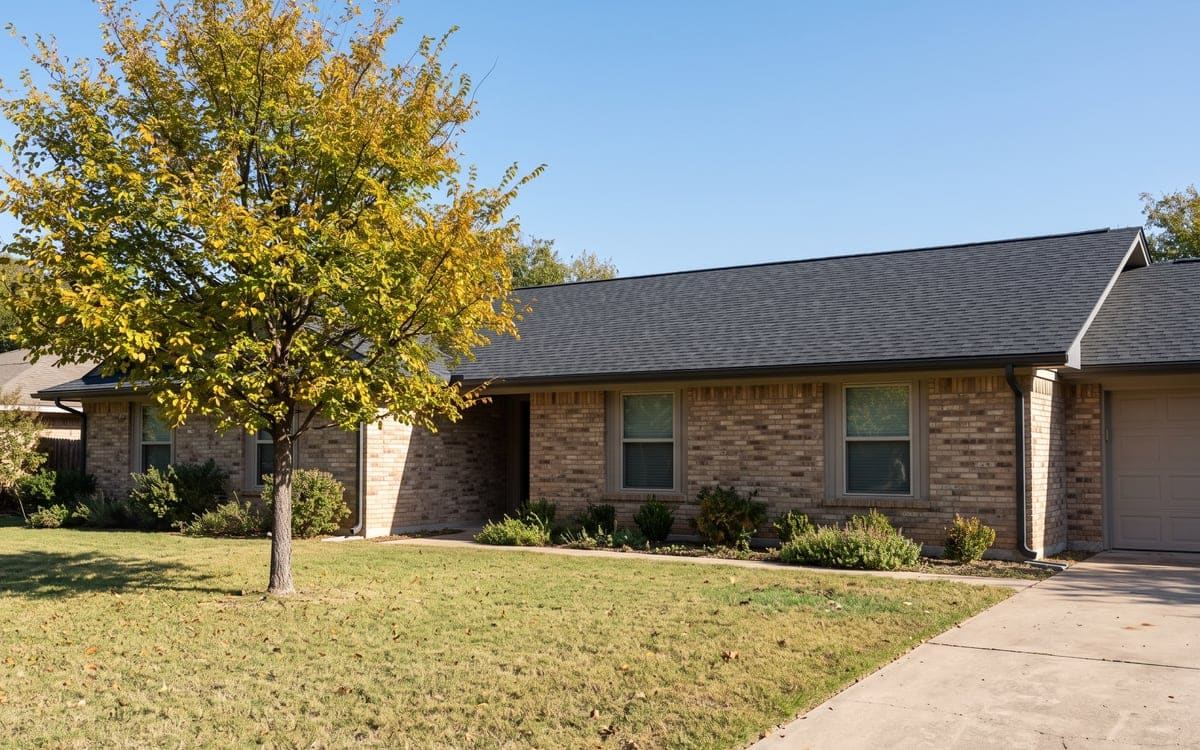
Austin's weather year
The Weather Service's summary names March through May as Austin's severe weather season, with most severe weather in the form of large hail and strong winds.1 It also notes that significant freezing rain, sleet or snow affects the Austin area about once every two years on average,1 and that late winter is typically the peak of fire weather season1 with very dry air and gusty north winds.
Camp Mabry is the official Austin site; Austin Bergstrom is the airport site. The two stations keep their own numbers, so each one is named with the figure that follows. Normal highs reach 90 degrees by May 26 and stay above 90 until September 23,1 the Weather Service says.
Austin's hot stretch and freeze window
Normal highs stay above 90 from late May to late September; Camp Mabry's median freeze window runs from early December to late February.
- Normal highs above 90 degrees: May 26 to Sep 23
- Median freeze window at Camp Mabry: Dec 3 to Feb 20
Sources: NWS Austin/San Antonio, Austin Climate Summary; NOAA NCEI U.S. Climate Normals 1991-2020, Austin Camp Mabry, station USW00013958.
Show the numbers behind this chart
| Date | What |
|---|---|
| May 26 | Normal highs above 90 degrees begins |
| September 23 | Normal highs above 90 degrees ends |
| December 3 | Median freeze window at Camp Mabry begins |
| February 20 | Median freeze window at Camp Mabry ends |
Spring: the severe season
Spring is when hail and strong wind find a roof. Of 274 Travis County hail reports of 1 inch or larger from 1996 to mid-2026, 216 came in March, April or May, with May the busiest at 86.2 ARMA says asphalt shingles can be used in desert and tropical regions, and that in hot weather they become more flexible, so rough handling can tear them or break the laminating adhesive on multi-layer shingles.3 On the storage side, Owens Corning says to take extra care handling shingles below 40 degrees F.4
If storm damage is the reason for a new roof conversation, roof hail damage covers what a roofer looks for and roof storm damage work covers the repair side.
Summer: long stretches above 90 degrees
Camp Mabry averages 122.8 days a year with a high of 90 degrees or more, 82.0 of them in June, July and August,5 and 28.7 days a year with a high of 100 degrees or more.5 August is the hottest month at the station, with a normal high of 97.8 degrees and a normal low of 75.1.5 The summer season (June, July, August) runs at a normal high of 95.9 and a normal low of 74.3.5
For a shingle roof, the heat is a working condition. ARMA says most asphalt shingles have a thermally activated sealant that bonds them together once they are on the roof and exposed to enough heat from sunlight,3 which is Austin's summer in a sentence. ARMA also says the adhesive underside of self-adhered water protection membranes is more aggressive in hot weather, so extra care may be needed when installing them,3 and that pneumatic nailer pressure settings are adjusted as roof temperatures change, to avoid overdriving or underdriving fasteners.3 On storage, ARMA says shingles are best stored in a cool, dry place, not in direct sunlight for any extended time before installation,3 though they are designed to withstand direct exposure to the hot summer sun after they are on the roof.
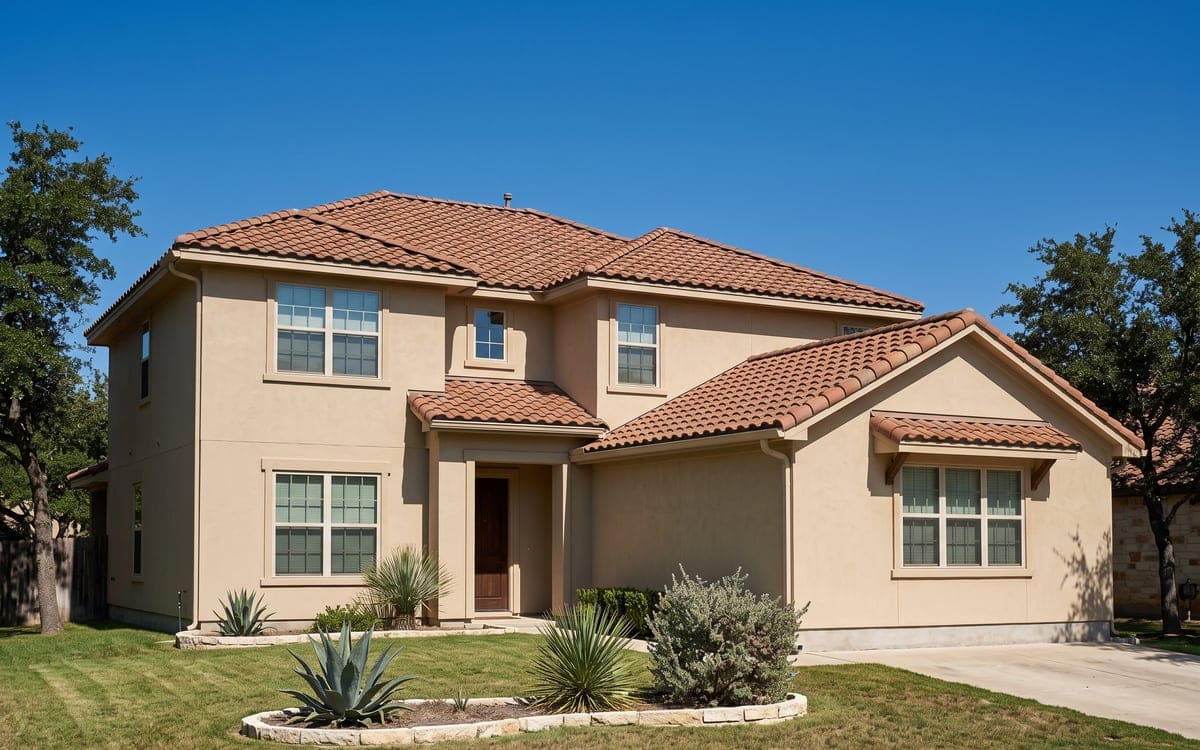
Fall: one of Austin's wettest months
October is the second wettest month in Austin, with a Camp Mabry normal of 3.91 inches.5 The Weather Service names the three wettest months as May, October and June, in that order,1 and says spring and summer rain in Austin usually comes from thunderstorms, which can be very efficient rainmakers, with large amounts of rain falling within short periods of time.1
SPRI's thermoset membrane guideline (written for commercial roofs) says the roof surface must be free of standing water, ice, snow or other moisture before the membrane goes on, and membrane is not installed during precipitation,6 with each job following the membrane maker's own instructions.
Winter: freezes, and now and then ice
Sub-freezing temperatures occur on about 12 days a year at Camp Mabry but 33 days at Bergstrom,1 the Weather Service says, and the coldest low on record was -2 degrees on January 31, 1949. At Camp Mabry the median first 32-degree freeze is December 3 and the median last is February 20;5 at Bergstrom the window is November 16 to March 12.7
Freeze days are not the whole winter story. The Weather Service says significant freezing rain, sleet or snow affects the Austin area about once every two years.1 Late winter is also the peak of fire weather season, with very dry air and gusty north winds behind cold fronts.1 GAF says its self-sealing shingles bond with sun and warm temperatures, may never seal if surface temperatures stay too low, and must be hand sealed in prolonged cold,8 as one shingle maker example. The shingle maker's own instructions decide. For a flat roof in winter, the membrane maker's cold-weather instructions apply the same way.
What the weather means for the work itself
Each season brings a different set of weather conditions a roof job has to meet.
| Season | What the weather does | What it means for a roof job |
|---|---|---|
| Spring (March to May) | The severe season, with hail and wind; May the wettest month (5.04 inches, Camp Mabry) | 216 of 274 Travis County hail reports of 1 inch or larger fall in these months; the maker's instructions decide the work window |
| Summer (June to August) | Normal highs above 90 from May 26 to September 23; 28.7 days at 100 or more at Camp Mabry | ARMA: shingle sealant is thermally activated once shingles are on the roof |
| Fall (September to November) | October is the second wettest month (3.91 inches at Camp Mabry) | SPRI: membrane is not installed during precipitation; the maker's instructions decide |
| Winter (December to February) | 12 freeze days a year at Camp Mabry, 33 at Bergstrom; freezing rain or sleet about once every two years | GAF: self-sealing shingles may not seal if surface temperatures stay too low; cold-weather hand sealing |
The Weather Service says Austin sits where the Colorado River meets the Balcones escarpment, with elevations from 400 feet in the east and southeast to just above 1,000 feet on the northwest side, so weather can differ across the city at the same time.1
When the roof cannot wait for a season
A roof open to the sky does not wait for a better month. If a tarp or temporary cover is up, that is a stopgap a roofer sets. NRCA says roof openings should be temporarily covered with tarpaulins to minimize rain damage, and except in extreme situations roof system repairs should not be attempted.9 Our emergency roof repair in Austin page covers the stopgap work, roof storm damage work covers the follow-on repair, and roof replacement in Austin covers the whole-roof scope.

For a job that is holding back water, the answer is to start the look over the roof. Roof installation in Austin covers the pieces of a new roof regardless of month.