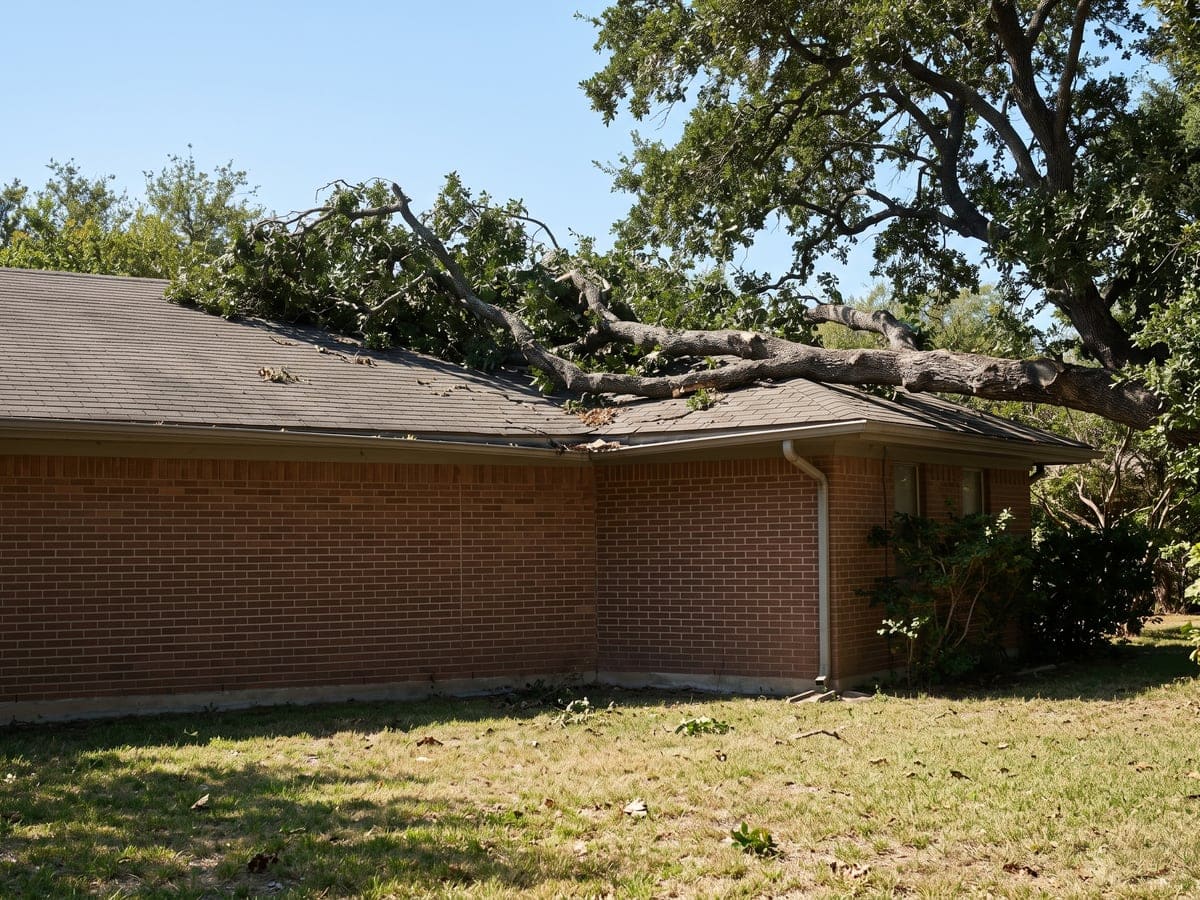
What happens when a roof is open
A call like this is inside first, outside once the weather allows. The roof itself waits for a safe look; what you can do is on the inside, out of the storm.
1. Inside first: what you do while water is coming in
Move furniture, rugs and electronics out from under the drip. A bucket on a towel catches the water. Stay clear of a ceiling that is bulging and away from wet light fixtures. ARMA,1 the shingle makers' trade association, says the first step with a damaged roof is to minimize water entry before any repair is attempted, with buckets to collect water from insulation and ceilings.
While water is coming in
What to do inside the house. The roof itself waits for a roofer.
Move what you can
Furniture, rugs and electronics away from the drip.
Catch the water
A bucket or tub under the drip, a towel under it.
Keep clear
Of a ceiling that sags or holds water, and of wet light fixtures.
Tell us what you see
Where the water is, what the weather did and what the roof is made of.

Downed power lines are the other hazard. The CDC2 says to stay clear of fallen power lines, including ones hanging overhead, and call the electric company to report them; the American Red Cross3 adds that damaged or fallen lines, poles and downed wires can electrocute.
2. What the roofer looks at once the weather allows
The roofer waits for the storm to pass. Inspecting roof damage after a storm involves climbing a ladder onto a potentially unsound structure,4 should not be done alone, and never in the dark; no one works on a damaged roof5 until its strength and structural integrity have been determined. The look is for how the roof is holding, where water is still getting in, and what was wind damage versus debris. Most wind damage begins at the edges:4 once material loosens, suction raises it, pressure pushes it, and once the underside is exposed the wind has more to grab. Windblown debris can also damage a roof, so the check includes what blew onto it.
3. A temporary cover as a stopgap a roofer sets
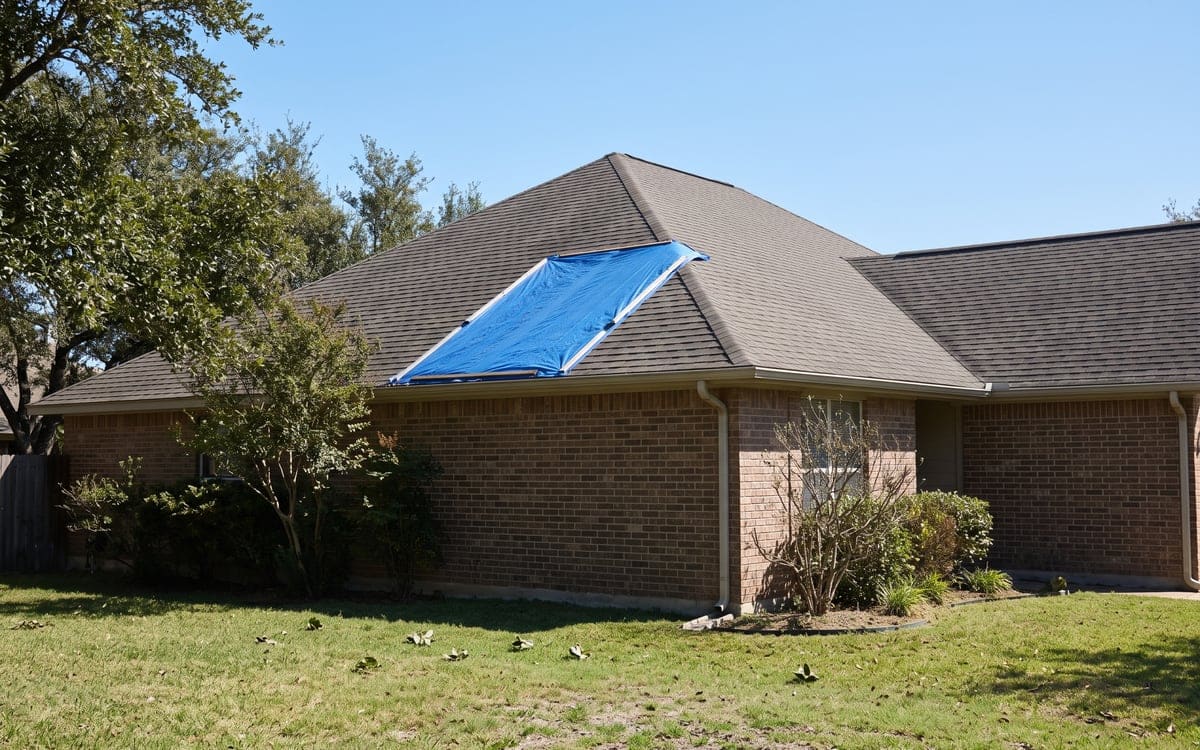
A temporary cover is a stopgap, not a fix. Roof openings should be temporarily covered with tarps4 to minimize rain damage, and except in extreme situations, repairs should not be attempted. People installing reinforced plastic tarps are at risk of falls and electrocutions;5 a tarp is never installed during a storm while it is windy or raining, and a tarped roof is very slippery when wet. That is why the cover is set by a roofer. Operation Blue Roof6 provides homeowners in disaster areas with fiber-reinforced sheeting until arrangements can be made for permanent repairs, once a mission is assigned to the Corps.
4. A limb on the roof
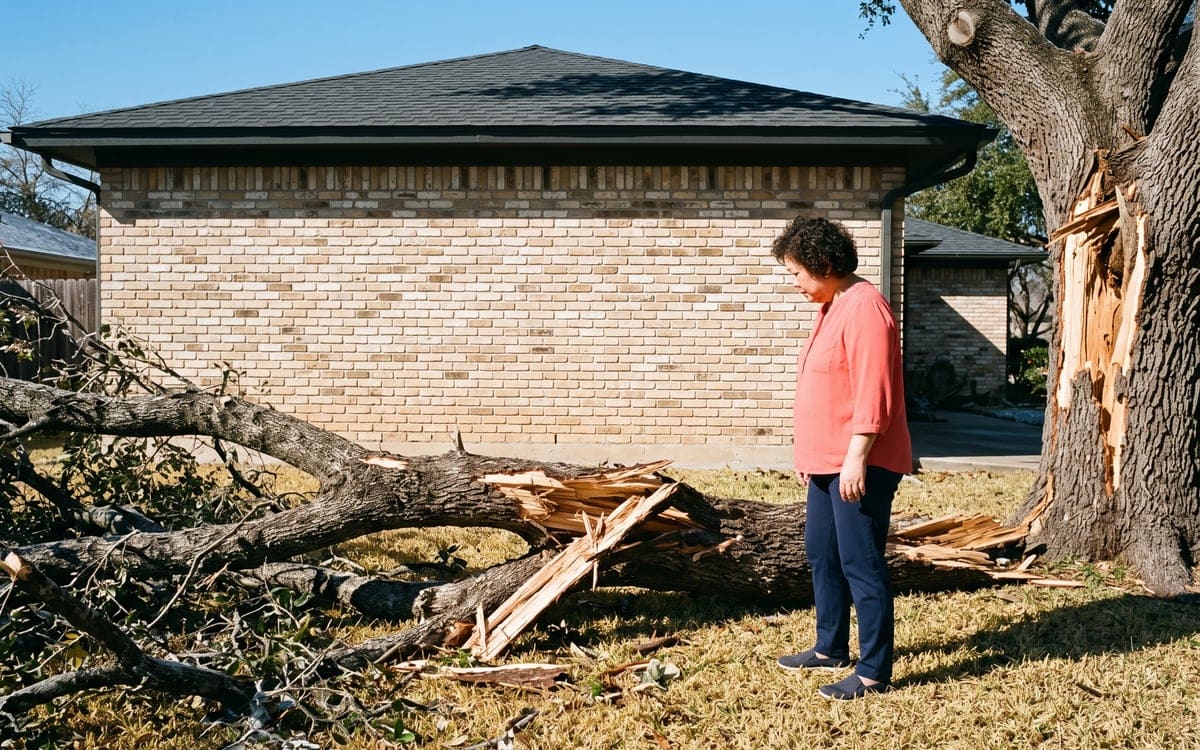
A tree limb on the roof is a tree trade's job first. The 2023 ice storm in Austin showed why: the Weather Service reported7 trees giving way under the weight of ice and falling onto cars, houses and power lines, with outages passing 200,000 customers. A roofer looks at the roof once the limb is clear.
5. The repair or replacement that follows
Once the roof is covered and the weather has eased, the actual repair follows. The 2021 edition of the International Existing Building Code,8 the model code, says that for damage less than substantial structural damage, the damaged elements may be restored to their predamage condition. For a small opening, that is a shingle swap and new flashing. For a larger one, it is a conversation about scope, and sometimes a full replacement. What a repair looks like on an ordinary call is on the roof repair page, and water that came in through a seam rather than an opening is on the slow leak page.
Here is what the common calls look like after a look.
| Symptom | Likely cause | What it usually needs |
|---|---|---|
| Water dripping through a ceiling | An opening in the roof | A temporary cover by a roofer, then a repair |
| A limb through the roof after an ice storm | Ice-loaded branches | A tree trade first, then the roof is looked at |
| Shingles torn off a section | Wind | A temporary cover, then new shingles |
| A ceiling bulging with water | Water held above it | Keep clear of it and call |
| Water around a light fixture | A leak above the fixture | Keep clear; power to that circuit is for an electrician or the utility, then the roof |
Where this page fits, and where another one does
When emergency roof repair is the right page
Water is coming into the house now, or a storm just opened a section of the roof. A branch is through the shingles. A ridge or edge was wind-torn in the last hour. The roof is open to the weather.
When another page fits better
A slow brown ring with no visible damage above is more of a stain with no clear cause than an emergency. Hail that damaged the roof but did not open it is on the storm damage page. Slopes worn across the house rather than torn in one spot are a conversation about a new roof. The job the water has settled from goes back to the repair that follows.
Ice storms and fallen limbs
The Weather Service says9 significant freezing rain, sleet or snow hits the area about once every two years on average.
Two recent ice storms in Austin
What the Weather Service and NOAA recorded in February 2021 and in the 2023 ice storm.
February 2021
- A quarter to half an inch of freezing rain across the metro area
- 162 hours at or below freezing at Bergstrom
- Carports collapsing under ice and snow
The 2023 ice storm
- Half to three quarters of an inch of ice
- 0.69 inches of ice at Camp Mabry
- Trees falling onto cars, houses and power lines
Sources: NWS Austin/San Antonio, Weather Event Summary: February 2021 Historical Winter Storm Event, South-Central Texas (February 10-18, 2021); NWS Austin/San Antonio, Austin Bergstrom Area unofficial records tables (updated March 2022); NOAA NCEI Storm Events Database, bulk details files, Travis County, Texas (event and episode narratives); NWS Austin/San Antonio story map, 2023 South Central Texas Ice Storm (February 19, 2023).
In February 2021, a quarter to half an inch of freezing rain10 built up across the metro area on the morning of February 11. Austin Bergstrom's longest stretch at or below freezing on record,11 162 hours, ran from February 12 to February 19 of that year. NOAA's Travis County narrative12 for the last round reports power lines down and carports collapsing under the weight of ice and snow. In late January and early February 2023, ice built up a half to three quarters of an inch7 from the Hill Country east into Austin, with the Camp Mabry station recording 0.69 inches of ice.12 The Weather Service wrote up what came next: trees gave way under the added weight and fell onto cars, houses and power lines.
When Austin roofs open up
Travis County has 274 reports of hail 1 inch or larger12 in NOAA's Storm Events Database from 1996 to mid-2026, with 216 falling in March, April or May. Austin thunderstorms are efficient rainmakers: the Weather Service says9 rainfall has topped 5 inches in several hours, and the two-day record is 19.03 inches on September 9 and 10, 1921.
What our visit covers for an emergency call
The visit covers getting a cover over the opening so the inside stops taking on water, looking at how far the damage goes, and planning the real repair that follows. The weather sets what can be done; a tarp goes on when it is safe to put one on. We go over the work and the price before anything is set in place. The drivers of price for a bigger job are in what moves the price.