
How our roofer tracks a leak
Penetrations and intersections are typically the places most vulnerable to water getting in.1 A leak call starts at the stain, works through the attic deck above it from the hatch opening, and ends up on the roof itself.
Where a roof lets water in
The joints a roofer checks first when tracing a leak.
Joints and edges
- Step flashing at walls
- Flashing around chimneys
- Valleys between slopes
Things through the roof
- Pipe boots on vent pipes
- Roof vents
- Skylight flashing
Not the roof at all
- Condensation in the attic
- A plumbing line
1. The stain, where it sits and when it shows
A stain beside the chimney gets a close look at the two-part flashing there: damaged or failing chimney flashing is a common cause of leaks for homeowners,2 the shingle maker GAF says. For a stain somewhere else, the attic above the ceiling narrows it down. When the stain shows helps too: a spot that only turns up after wind-driven rain points differently from one that shows after a long soak.
What to do inside about a leak
Steps for inside the house only.
Move things
Belongings and rugs out from under the drip.
Catch the drip
A bucket on a towel.
Keep clear
Of a sagging ceiling and wet light fixtures.
2. The attic above the stain
The underside of the deck can be inspected from the attic to detect leaks,1 with any on-roof work left to a competent roofer. For your part, that look is from the hatch opening. The deck above the stain gets a look for wet or stained decking, and the drip path traces back to where water got through the roof.
3. Flashing at walls and chimneys
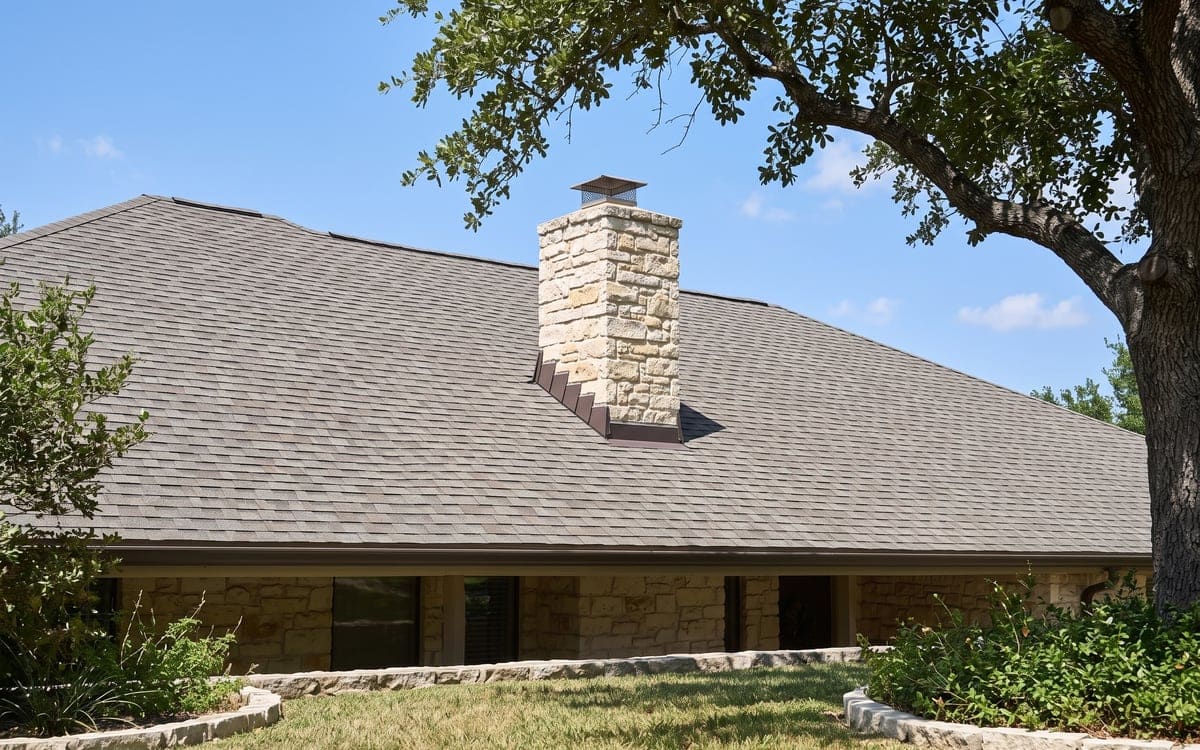
When a roof leaks, 95 percent of the time the leak is likely at a flashing point,2 the maker GAF says. A roof plane that ends against a wall is protected by sheet metal step flashing1 placed under the shingles course by course. A chimney uses two-part flashing: an apron fastened to the deck and counterflashing fastened to the masonry, so the two slide as chimney and roof move. The up-roof side also wants a cricket to divert water around the chimney.
4. Valleys
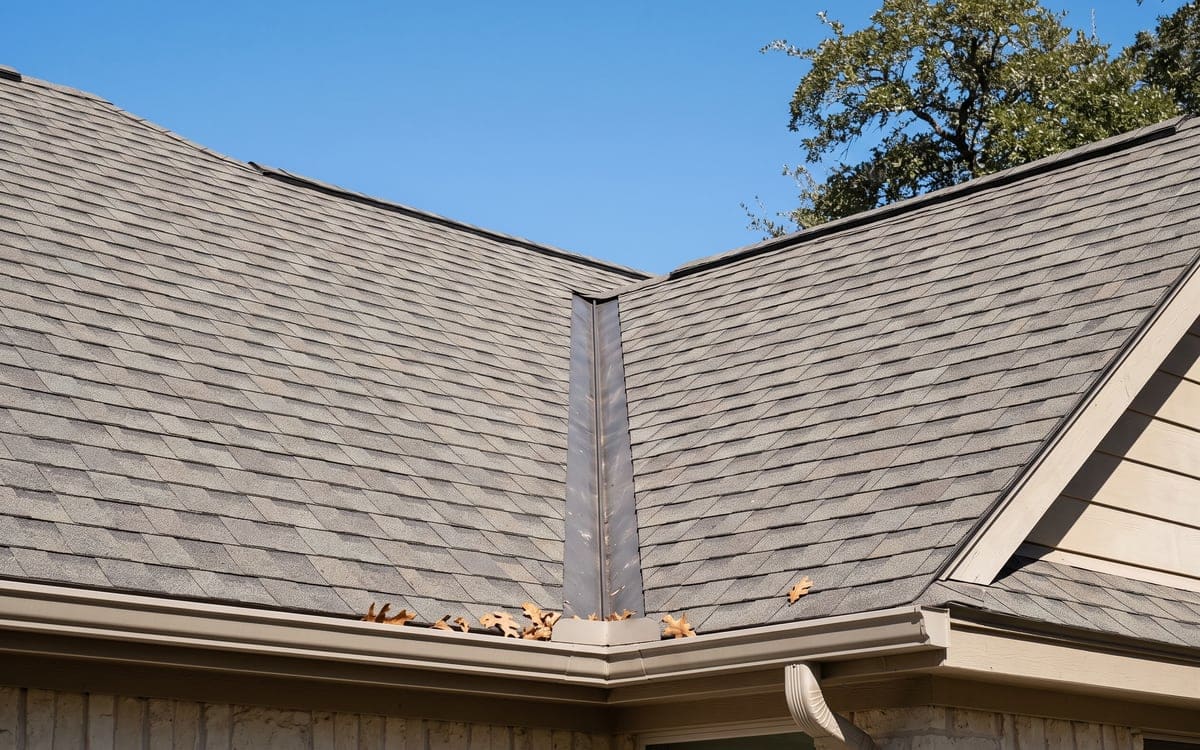
Valleys collect water from both slopes above them. A valley that is not properly flashed2 lets water creep under the shingles, GAF warns. On an open metal valley, the upper strip of flashing laps over the lower one so drainage carries over the joint and not into it.
5. Pipe boots, vents and other penetrations
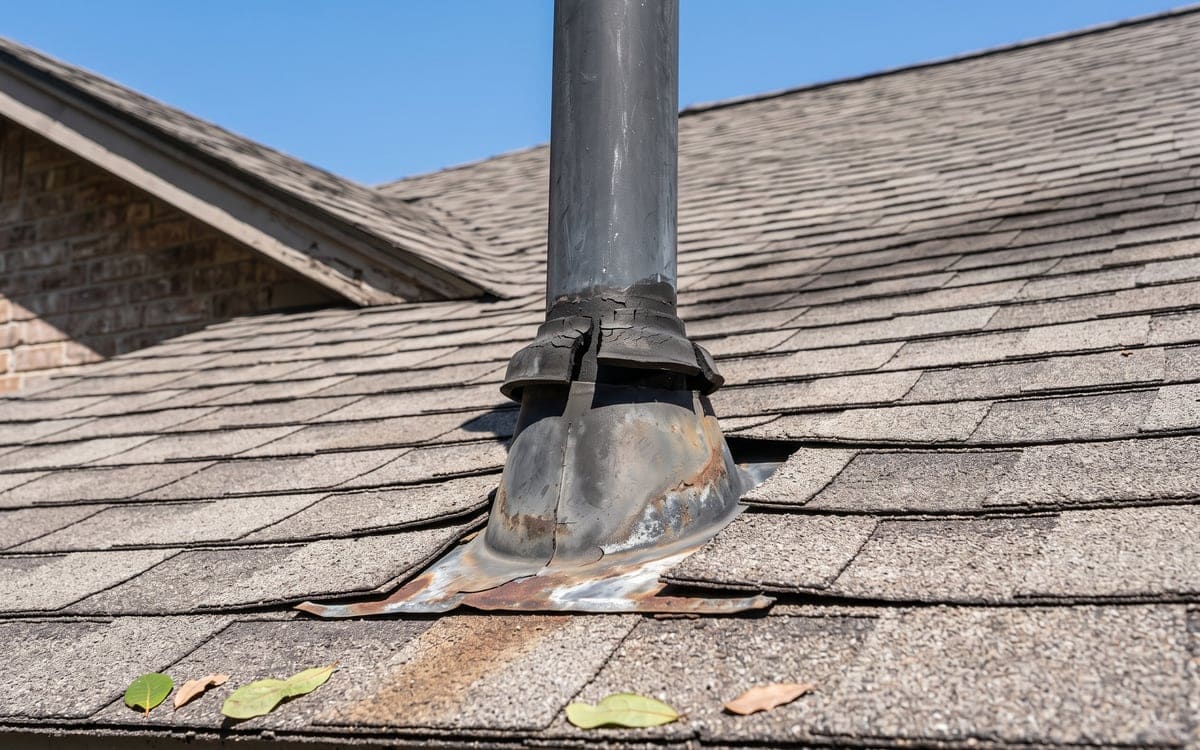
Practically all houses have vent pipes through the roof, and their round shape calls for a preformed flange (a boot) that fits snugly over the pipe, set in asphalt roof cement, with the lower flange over the lower shingles and side and upper shingles over the flange. The rubber boot is the most common pipe-vent flashing2 GAF names. Some vent pipes are instead sealed with a rubberized gasket that can dry out3 and fall apart over time.
6. Skylights
Skylight flashing is a roof job; the glass itself is another trade. A skylight needs proper flashing2 so water is directed away and off the roof. A cracked pane or failed seal is for the skylight maker or a glazier.
7. Condensation and plumbing
Not every ceiling stain comes from the roof. Condensation forms when water vapor meets a cold surface1 such as the underside of a roof deck, and the condensed water can soak insulation, rot deck and framing, and peel paint. ARMA's manual notes that exhaust air is not vented into the roof cavity or attic. A pipe behind a wall is a plumber's work. Clogged gutters3 can also back water up underneath the shingles, so a leak call includes a look at the gutters.
Here is what the common leak calls look like after a check.
| Symptom | Likely cause | What it usually needs |
|---|---|---|
| A stain far from any visible damage | A penetration or intersection on the roof above, ARMA says | Tracing from the attic back to the roof |
| A drip only in heavy rain | Flashing or a valley | Re-flashing or valley work |
| A drip around a vent pipe | A cracked pipe boot | A new boot |
| A stain near the chimney | Step or counterflashing | Re-flashing the chimney |
| Damp insulation with no rain | Condensation or a plumbing line | A look at ventilation, and a plumber if it is a pipe |
| A stain around a skylight | Flashing at the skylight | Re-flashing; the glass is another trade |
Where this page fits, and where another one does
When roof leak repair is the right page
A ceiling has a stain or a drip. Water shows only sometimes. The roof above the stain looks fine from the yard. The problem has shown once or twice over several storms.
When another page fits better
Water pouring into the house now is on the page for water pouring in. Hail that hit the roof is on the storm page: after a hailstorm. Leaks in several places with worn slopes across the house point to a new roof. A single shingle that lifted or a cracked boot not causing a leak yet is on the roof repair page.
Leak or condensation?
Not every stain is a roof leak. In summer and hot, humid climates, radiant heat from the sun raises roof deck temperatures and gradually heats the attic,1 and a properly ventilated flow-through air space under the deck relieves heat and moisture buildup. Dryer and bathroom fans should vent directly outside,3 not into the attic. A plumbing line in a ceiling or wall is a plumber's trade. If the stain is a leak, a full inspection can find the rest.
What our visit covers for a leak
The visit covers the stain inside, the attic from the hatch opening, the flashing and penetrations on the roof above the stain, and enough of the slopes to say whether this is a repair or a sign of a bigger job. We go over the work and the price before anything is pulled apart. Pricing has drivers: how long water has been getting in, whether the deck is sound, which part of the roof the leak traces to, and whether flashing can be worked back in or has to be rebuilt. What moves the price is written up on the same logic for a bigger job.
Leaks in Austin's downpours
Camp Mabry averages 36.25 inches4 of rain across 85.8 days a year, 11.0 of which bring an inch or more. The Weather Service5 calls May, October and June the wettest months. The Weather Service also says Austin thunderstorms are efficient rainmakers: rainfall has topped 5 inches in several hours, and the two-day record is 19.03 inches on September 9 and 10, 1921.